Living by the coast in Auckland—from the rugged cliffs of the North Shore to the serene beaches of Ponsonby—is a dream for many. However, for a homeowner, the coastal environment poses unique challenges. The salty sea air, high humidity, and intense UV rays can wreak havoc on outdoor structures if they aren't built from the right materials. Choosing a fence isn't just about aesthetics; it's about investment protection and architectural harmony.
The Hauraki Gulf brings beauty, but also salt-laden winds. Salt is highly corrosive to metals and can accelerate the aging and rotting process of certain timbers. Furthermore, Auckland's subtropical climate means your fence will face high moisture levels one hour and scorching sun the next. This constant cycle of expansion and contraction can cause warping, cracking, and structural failure in inferior products.
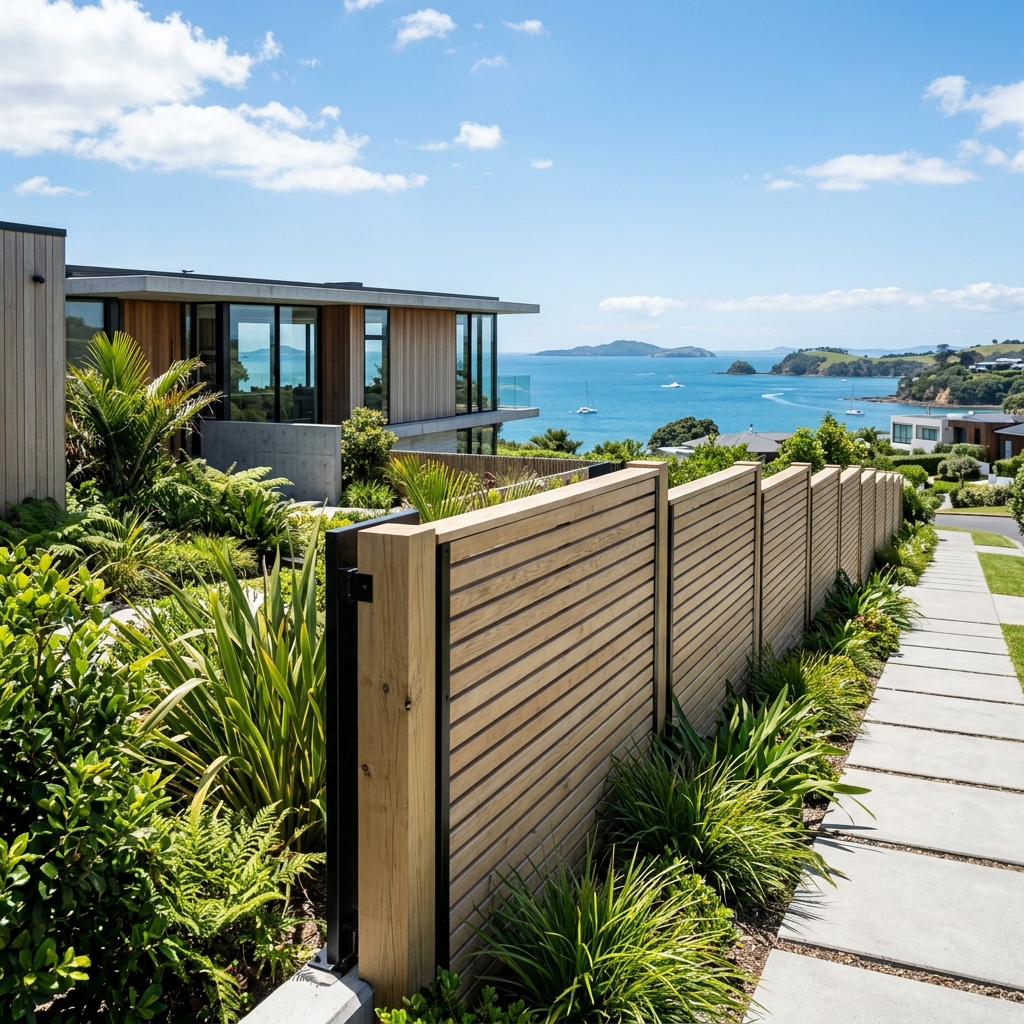
A high-end horizontal timber fence provides both privacy and wind resistance for coastal properties.
Timber remains the most popular choice for Auckland fences due to its natural warmth and versatility. However, not all timber is created equal. For coastal areas, we exclusively recommend H3.2 or H4 pressure-treated Pine or the naturally resilient Western Red Cedar.
Pros: Timeless look, can be easily painted or stained to match your home's exterior, and generally the most cost-effective option for large boundaries. Timber fences also act as excellent windbreaks, diffusing the wind rather than blocking it entirely, which prevents high-pressure turbulence on the leeward side.
Cons: Requires regular maintenance. In coastal Auckland, we recommend a high-quality oil-based stain every 18-24 months to prevent the wood from silvering and becoming brittle from salt exposure.
If you are looking for a "set it and forget it" solution, PVC vinyl is the gold standard for beachside properties. Unlike wood, PVC cannot rot, warp, or be infested by insects. Most importantly, it is completely immune to salt corrosion.
Pros: Zero maintenance (just a quick hose-down twice a year), UV-resistant (it won't yellow in the NZ sun), and comes in various styles, including the popular "Hampton" look that perfectly complements seaside architecture.
Cons: Higher initial cost compared to standard timber. However, when you factor in the saved costs of staining and repairs over 20 years, PVC is often the more economical choice.
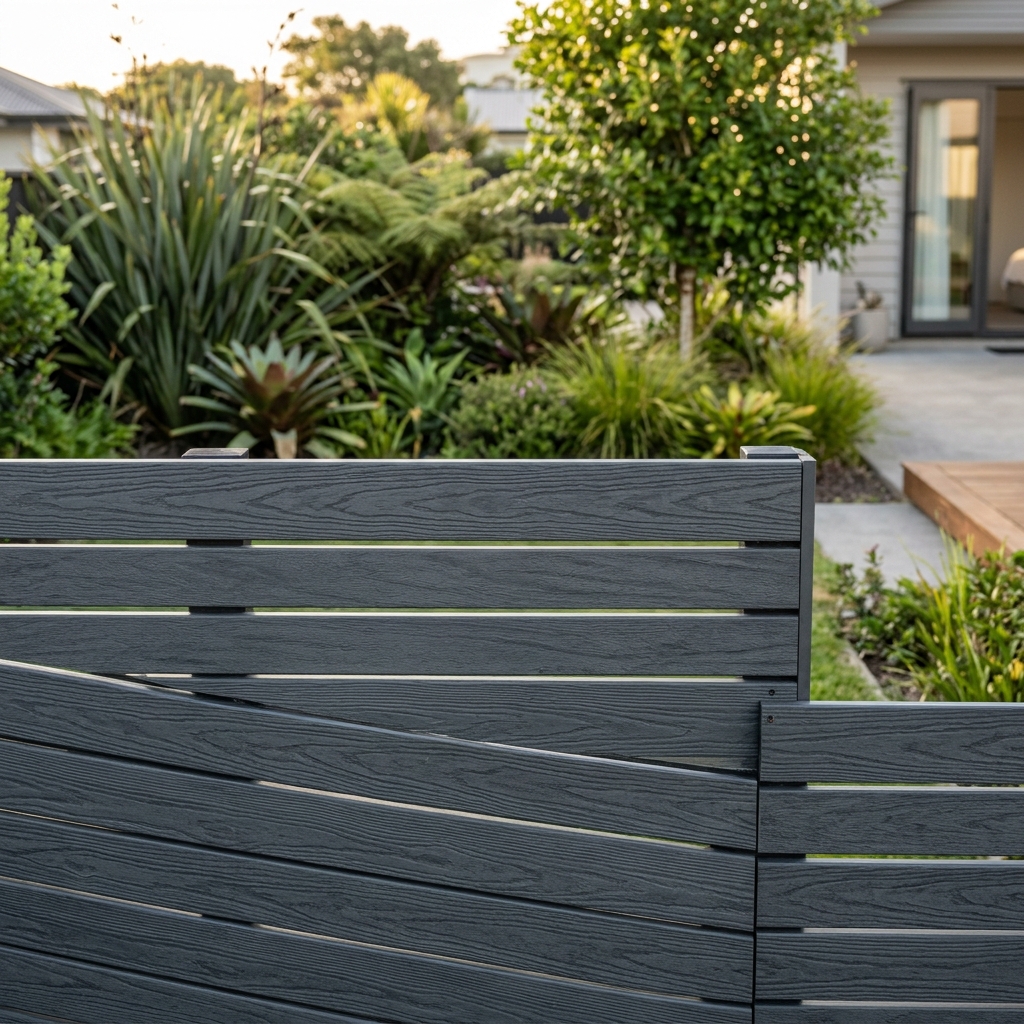
Composite materials offer a modern aesthetic with extreme durability against the elements.
Metal fencing has evolved. The days of rusty iron gates are gone. Modern Auckland homes increasingly use powder-coated aluminum slats or genuine Colorbond steel fencing. Aluminum naturally creates an oxide layer that prevents deep corrosion, making it perfect for the salty air of the Hauraki Gulf.
Pros: Sleek, modern lines, incredibly strong, and available in hundreds of colors. It is also an excellent material for automated sliding gates as it is lightweight and doesn't stress the motor.
Cons: While highly durable, aluminum can be dented by heavy impact. It’s also relatively rigid, so professional installation is required to ensure it follows the terrain correctly.
If you’ve paid for a coastal view, the last thing you want is a solid wall blocking it. Frameless glass fencing, typically 12mm thick toughened safety glass, is the ultimate choice for pool areas and ocean-front decks.
Pros: Unobstructed views, modern luxury aesthetic, and makes any space feel significantly larger. It also acts as a perfect wind shield for your patio or pool area without sacrificing the scenery.
Cons: Shows salt spray and handprints, so it requires regular cleaning with fresh water to maintain that crystal-clear look. It is also the most expensive material on this list.
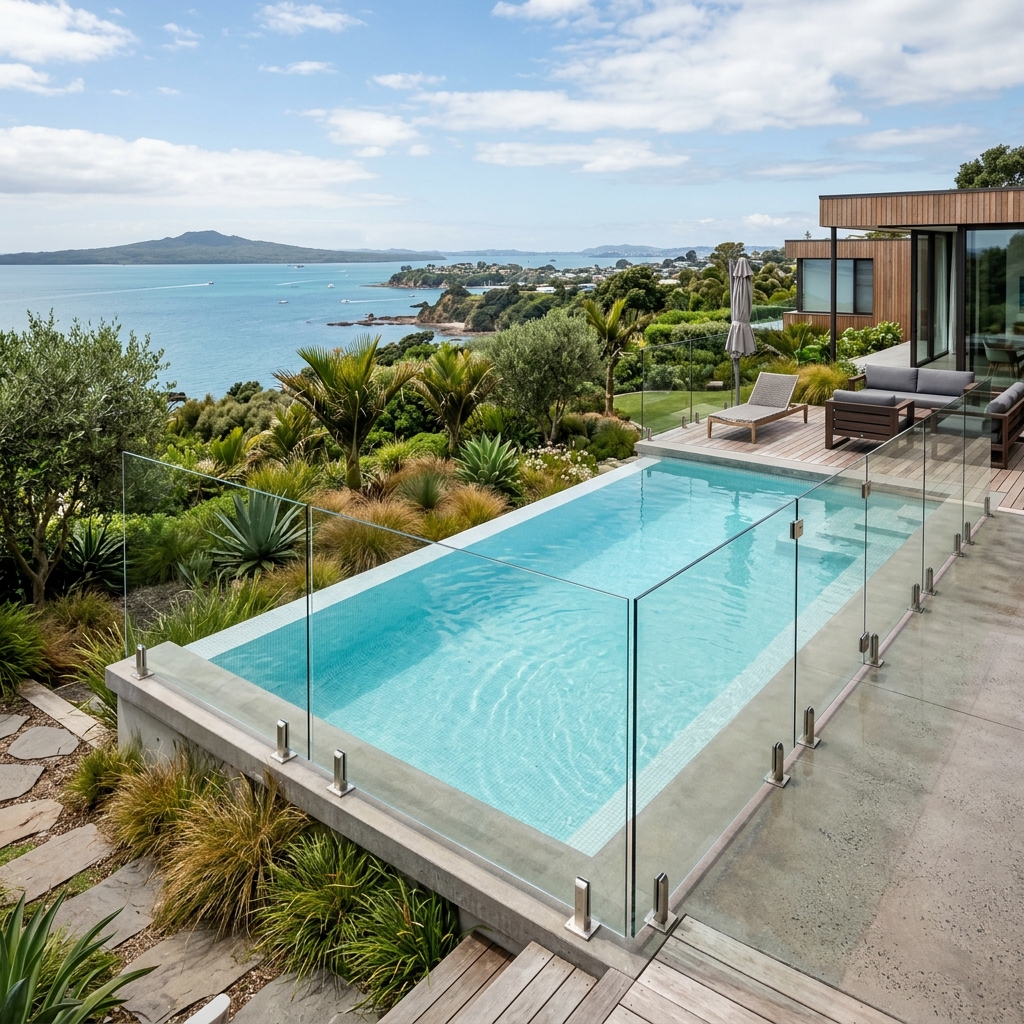
Glass fencing preserves your expensive Auckland views while providing safety and wind protection.
Composite fencing (a mix of recycled wood fibers and recycled plastics) is the newcomer that is taking the Auckland market by storm. It offers the look and feel of real wood with the durability of plastic.
Pros: Sustainability (mostly recycled content), no splinters, no warping, and no staining required. It’s particularly effective in humid Auckland areas like Waitakere or Titirangi, where mold can be an issue for traditional wood.
Cons: Limited color choices compared to paint, and it can expand slightly more than regular wood, requiring precise spacing during installation.
At Kiwi Fencing Co, we believe the "best" material depends on your specific property line and lifestyle. If you prioritize low maintenance, go with PVC or Aluminum. If you want the traditional Auckland look and are happy with occasional maintenance, Timber is your winner. For the ultimate luxury project with a view, Glass is the only way to go.
Still unsure which material will stand up best to your local conditions? Our team offers free on-site measures and consultations across the entire Auckland region. We can bring samples of all five materials so you can see how they look against your home's exterior.
Use our online calculator for an instant estimate or book a site visit today.
Interested in learning more about Auckland's specific building requirements? Check out our articles on Pool Fencing Regulations and the Average Cost of Fencing in 2026.