Planning a new fence and trying to work out a realistic budget? In 2026, most professionally installed residential fencing in New Zealand costs about $180–$500 per lineal metre, including standard materials and labour. Simple rural or chain-link fencing can cost less, while architectural aluminium, masonry and frameless glass can cost considerably more.
The metre rate is only a starting point. Fence height, ground conditions, access, wind exposure, demolition, gates and the amount of custom work can change the final quote substantially. A short fence may also have a higher rate per metre because delivery, machinery and site establishment costs are spread over fewer metres.
This guide explains current budgeting ranges for timber, Colorsteel, aluminium, PVC, pool, glass, chain-link, rural and commercial fencing. It also shows how installers price a job, which hidden costs to allow for, when consent may be required and how boundary-fence costs are usually handled under New Zealand law.
- Average fence cost in New Zealand
- Fence prices by material
- What changes the cost
- Fence cost examples
- Regional price differences
- Materials compared
- Labour, materials and other charges
- Removal and site preparation
- Gates
- Consents and boundary rules
- Installation process
- Maintenance and whole-of-life cost
- Ways to control the budget
- Common mistakes
- Frequently asked questions
Average Fence Cost in New Zealand
Most homeowners want one number, but a useful estimate needs at least four details: the material, height, total length and site conditions. The following table is a practical starting point for a complete professional installation on a reasonably accessible, mostly level site.
| Fence type | Indicative installed cost per lineal metre | Typical use |
|---|---|---|
| Rural post-and-wire | $45–$140 | Farms, lifestyle blocks, stock control |
| Chain-link | $120–$280 | Security, pets, commercial boundaries |
| Standard timber paling | $180–$350 | Residential boundaries and privacy |
| Timber slat or batten | $280–$550 | Screens, front yards, architectural homes |
| Colorsteel-style steel panel | $220–$450 | Low-maintenance privacy fencing |
| PVC or vinyl | $250–$500 | Residential privacy and decorative fencing |
| Standard aluminium | $300–$650 | Frontages, pools and low-maintenance sites |
| Aluminium slat or custom metal | $450–$900+ | Premium residential and commercial work |
| Glass pool fencing | $550–$1,200+ | Pools, decks and view preservation |
| Masonry, brick or block wall | $700–$1,500+ | Acoustic, security and premium boundaries |
These ranges generally assume normal installation, but not major retaining work, extensive rock excavation, engineering, resource consent, complex traffic management or high-specification automated gates.
Typical total project budgets
| Fence length | Budget fence at $180/m | Mid-range fence at $320/m | Premium fence at $550/m |
|---|---|---|---|
| 10 metres | $1,800 | $3,200 | $5,500 |
| 20 metres | $3,600 | $6,400 | $11,000 |
| 30 metres | $5,400 | $9,600 | $16,500 |
| 50 metres | $9,000 | $16,000 | $27,500 |
Add gates, demolition and unusual ground conditions separately. Small jobs can also sit above these simple calculations because every project has minimum travel, delivery and set-up costs. You can test different lengths and materials in our fence cost calculator, or request a free fence quote for a site-specific price.
Fence Prices by Material
Timber fencing cost
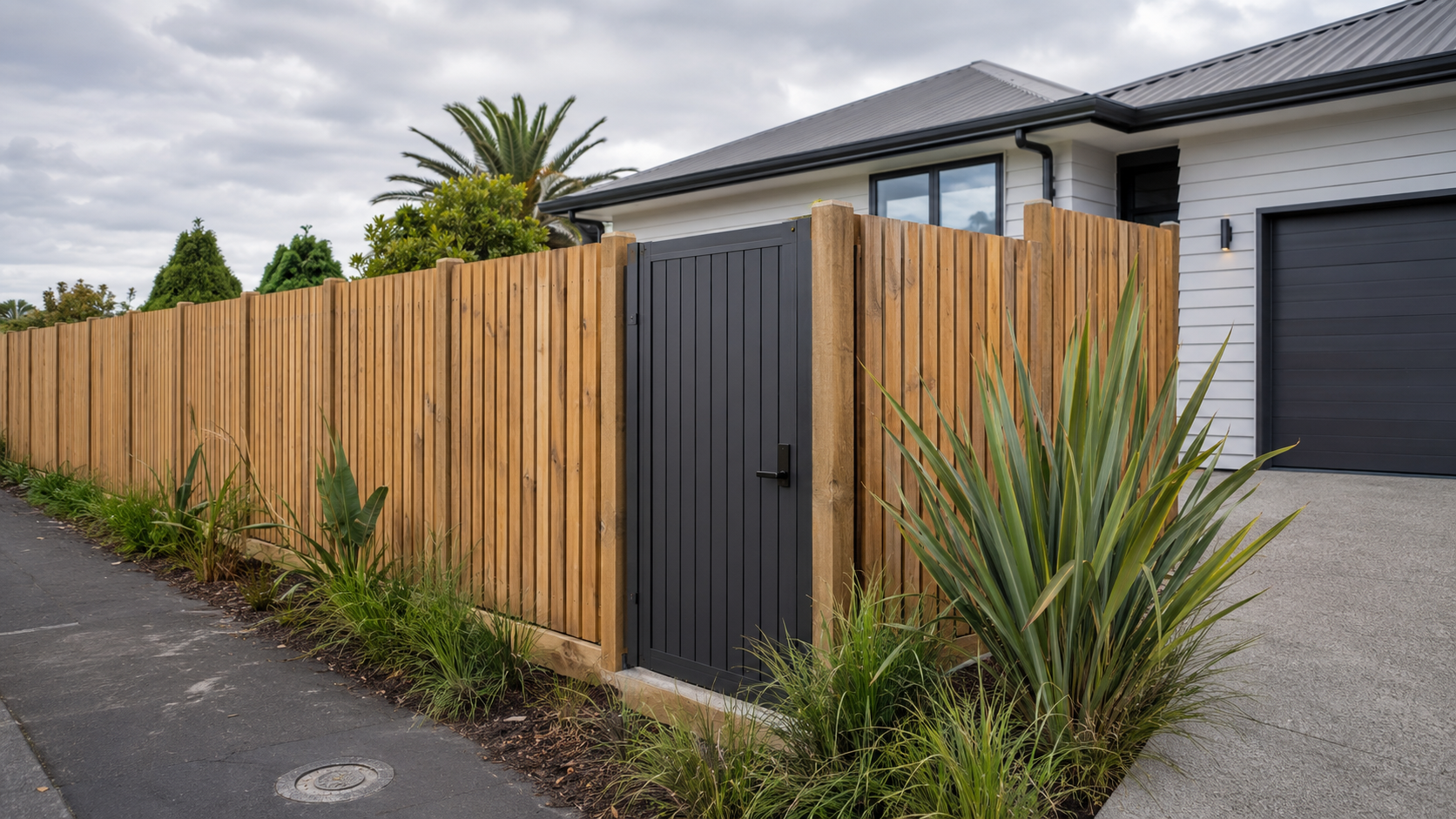
A standard treated-pine paling fence commonly budgets at $180–$350 per metre installed. The lower end usually means a straightforward, standard-height boundary fence with easy access. Taller fences, capped finishes, exposed posts, premium palings, double-sided construction or decorative details raise the price.
Timber remains popular because it:
- suits both older and contemporary New Zealand homes;
- can follow sloping ground;
- is easy to customise;
- provides good visual privacy;
- can be stained or painted in almost any colour.
Its drawbacks are ongoing coating, movement as timber dries, and the possibility of rot if the wrong treatment, fixings or post detail is used. Posts and other timber in ground contact should be specified for that exposure rather than selected on appearance alone. See our timber fencing page for specifications.
Colorsteel-style fencing cost
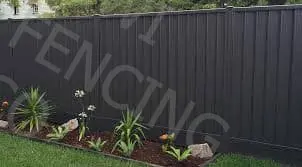
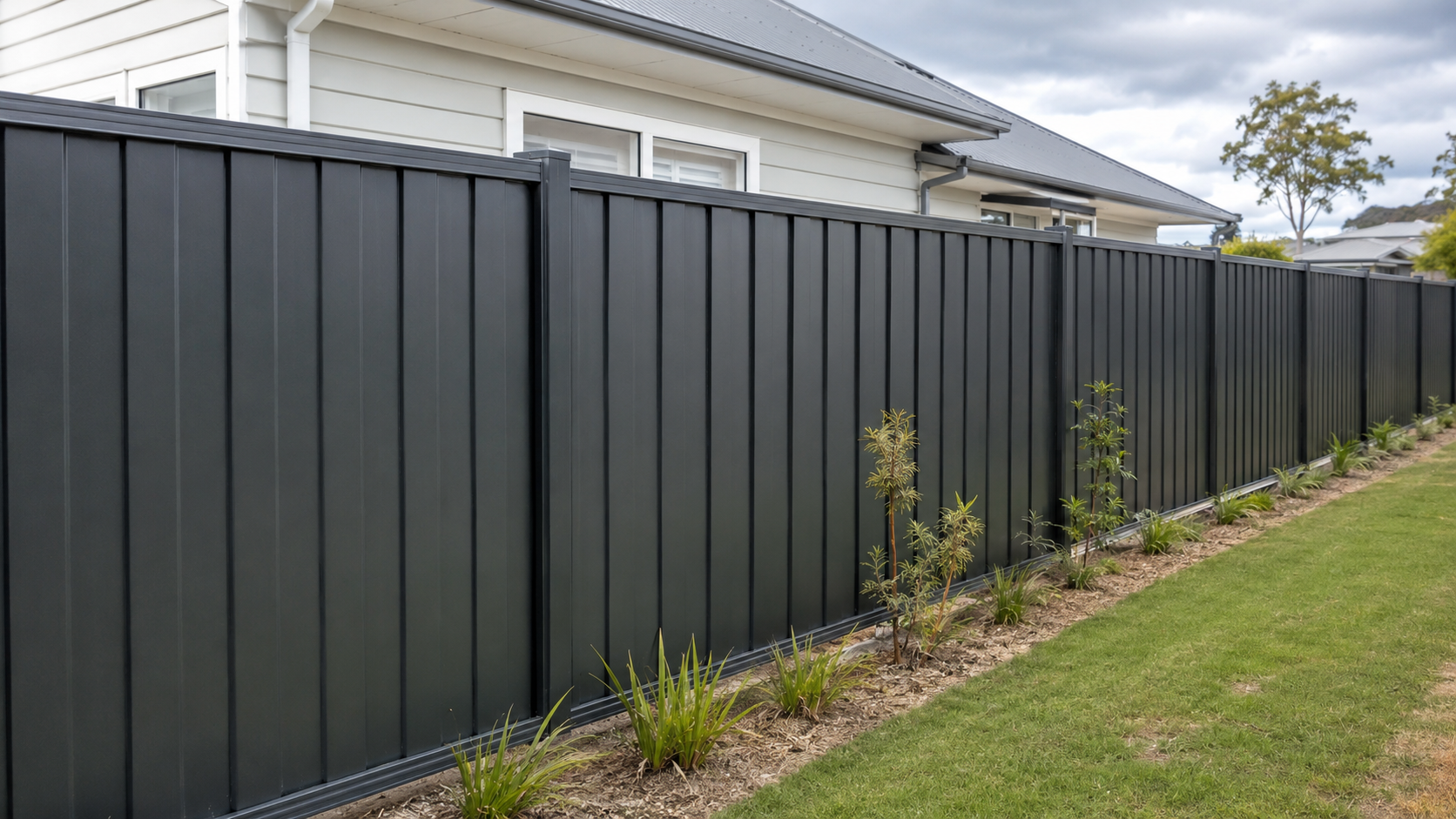
Steel privacy-panel fencing commonly falls around $220–$450 per metre installed, depending on the product system, height, posts, rails, colour, terrain and wind requirements.
It offers:
- full privacy;
- low routine maintenance;
- no need for painting;
- a consistent appearance;
- good resistance to normal residential wear.
The main limitations are that damaged sheets can be difficult to disguise, poorly detailed cut edges may corrode, and solid panels attract substantial wind load. Correct post spacing and footing design matter, particularly on exposed coastal or hill sites.
In New Zealand, “Colorsteel” is a specific brand name. A quote should identify the actual steel, coating system and proprietary fence product rather than relying on a generic label. See Colorsteel and metal fencing.
PVC or vinyl fencing cost
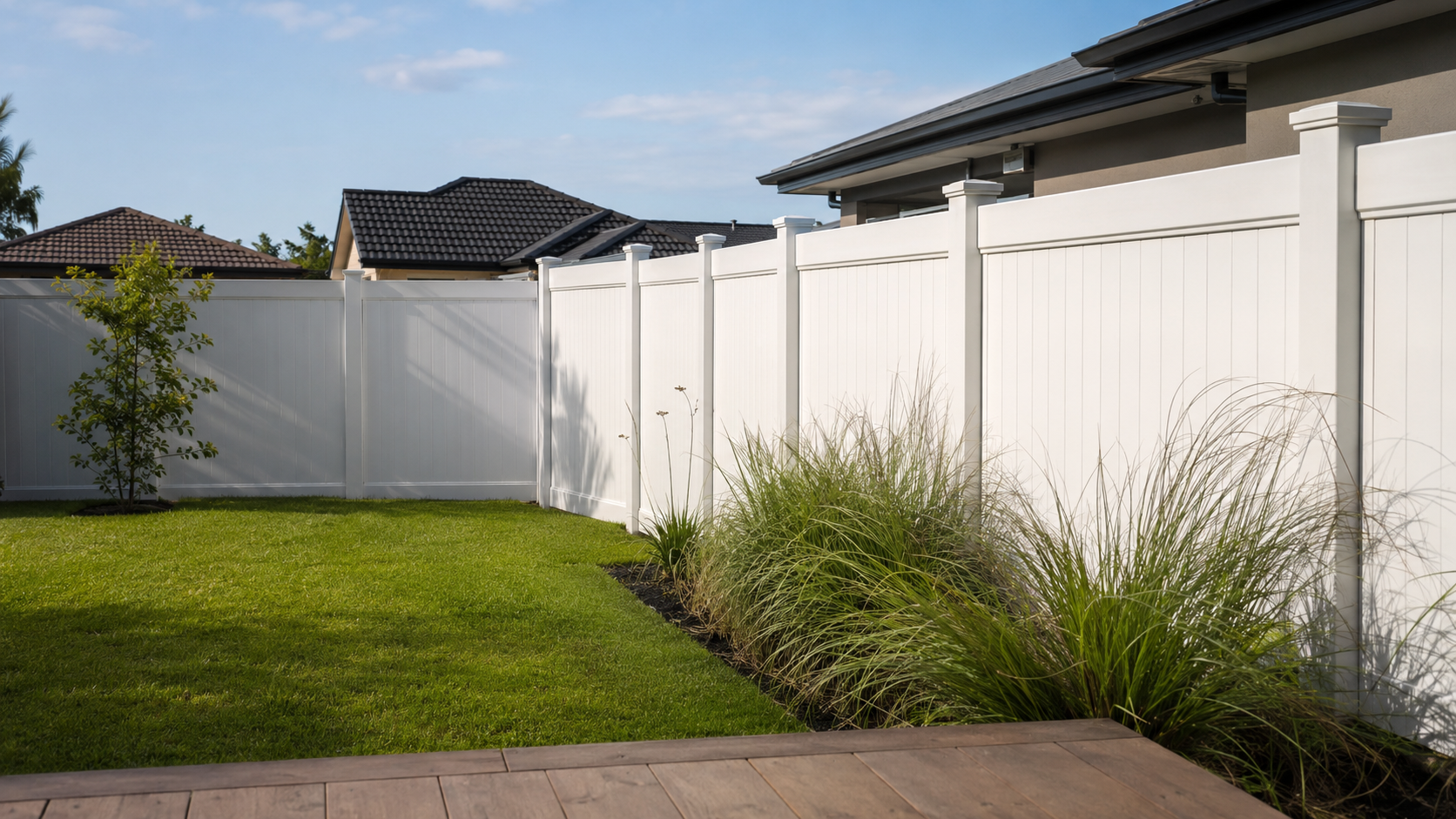
PVC fencing generally budgets at $250–$500 per metre installed. It is attractive where owners want a crisp appearance without repainting. Quality varies, so compare panel wall thickness, UV stability, reinforcement, warranty terms and the supplier’s replacement-parts support.
PVC is low maintenance, but it is not indestructible. Impact damage, unsupported spans and cheap components can reduce its working life. On exposed sites, the installation system is just as important as the panel. See PVC and vinyl fencing.
Aluminium fencing cost
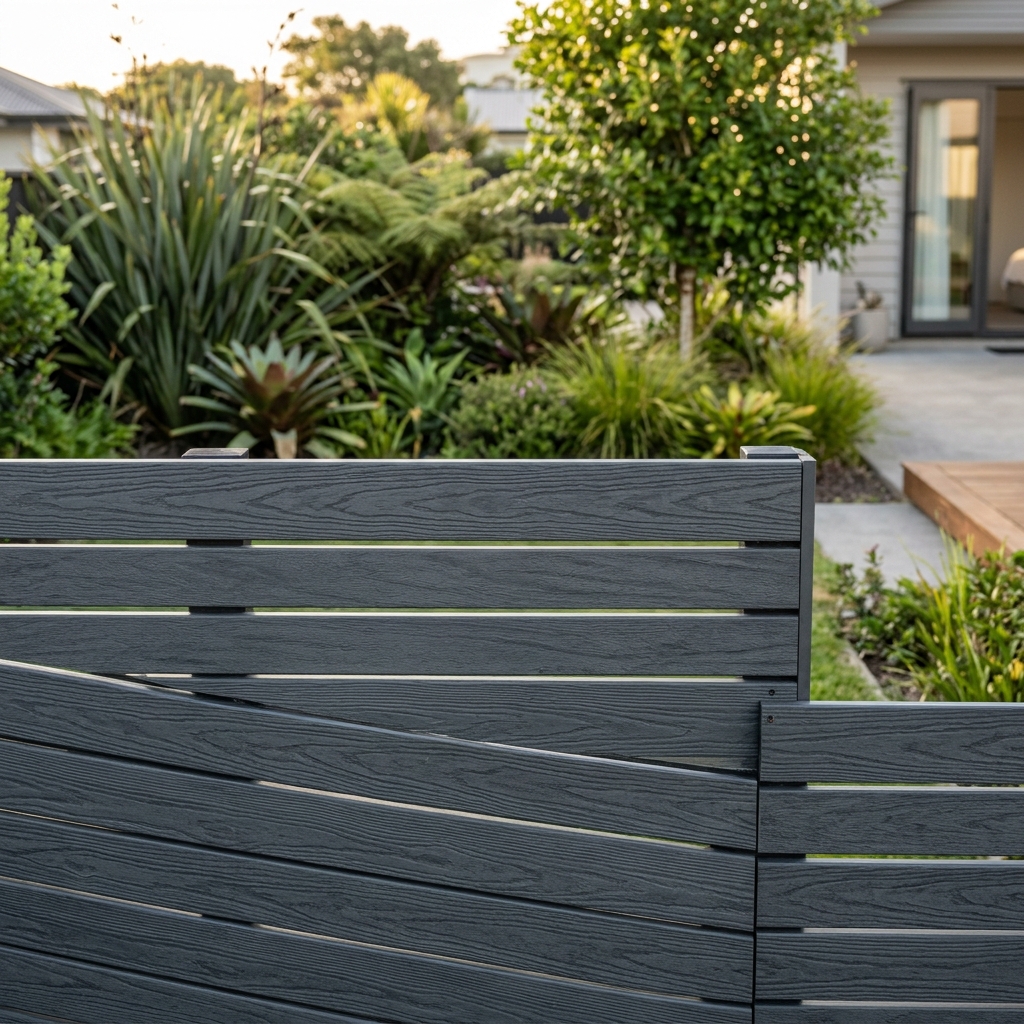
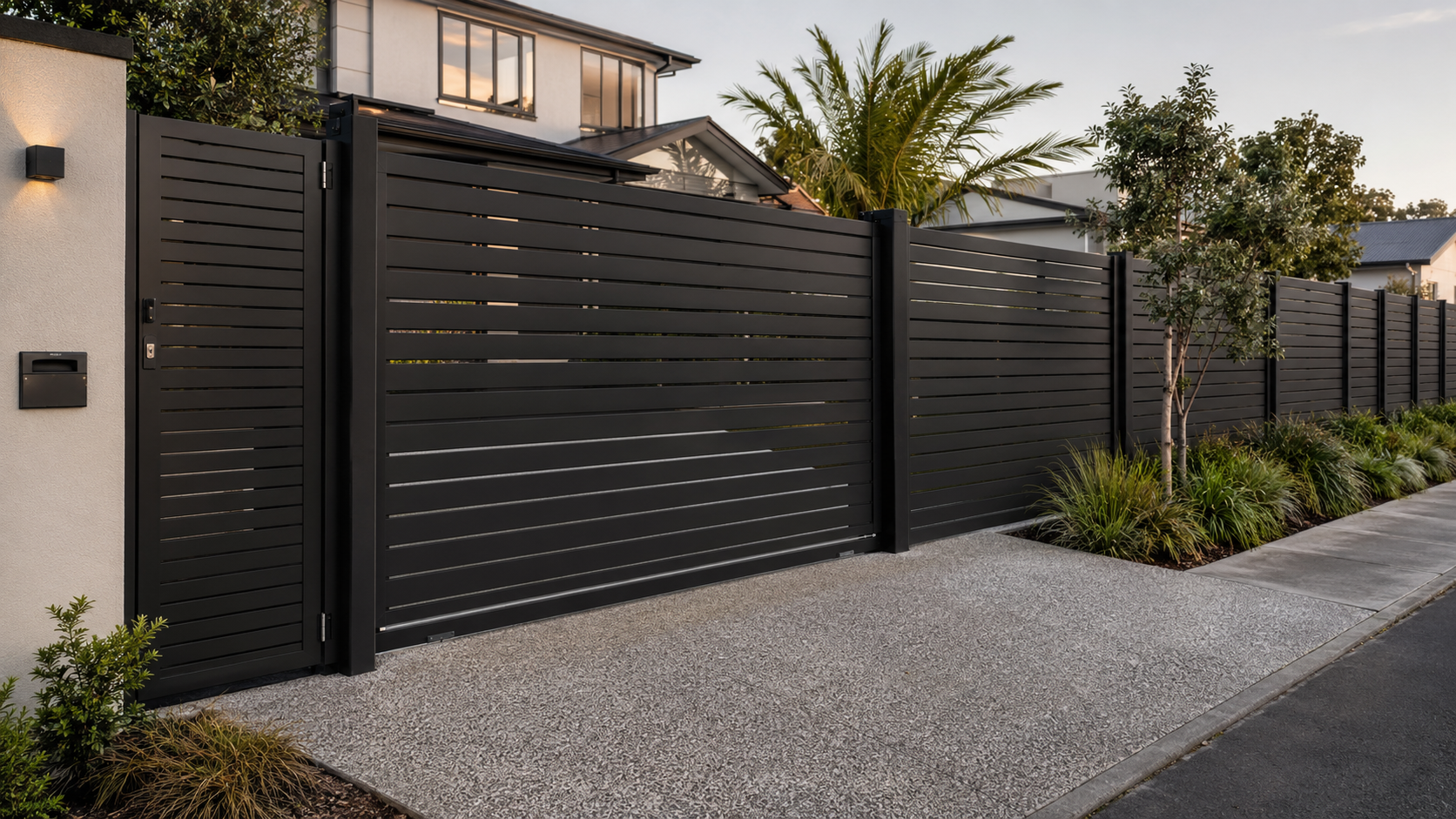
Standard powder-coated aluminium fencing may cost $300–$650 per metre installed. Custom aluminium slats, screens and architectural systems often cost $450–$900 or more per metre.
Aluminium performs well for front boundaries, pool enclosures and coastal settings because it is light, corrosion-resistant and does not require repainting when the coating remains intact. Bespoke heights, tight slat spacing, raked panels and custom colours add fabrication time. See our aluminium and metal fencing options.
Glass fencing cost
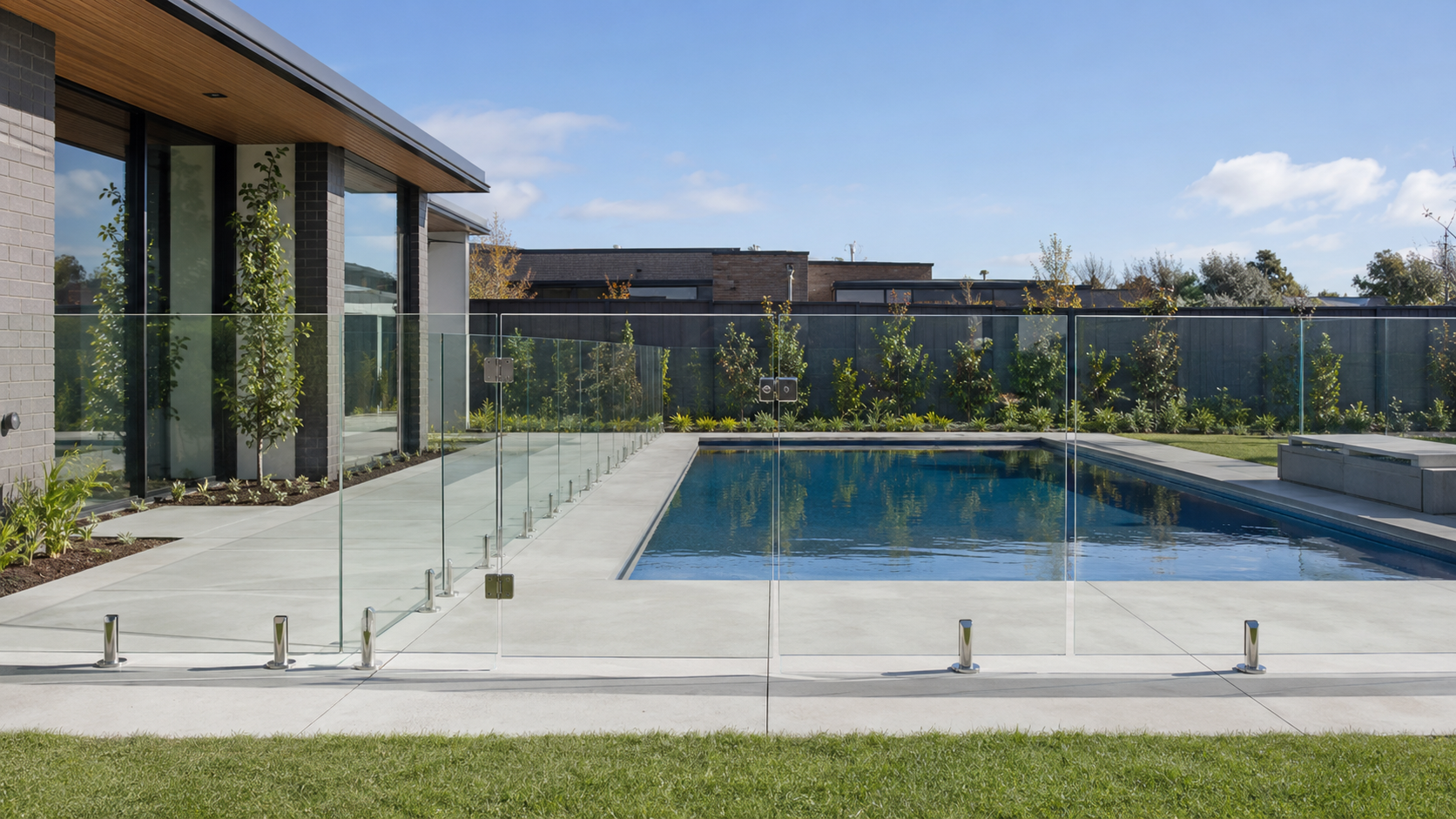
Allow approximately $550–$1,200+ per metre installed for glass fencing. Semi-frameless systems tend to cost less than fully frameless systems, while complex corners, difficult fixing substrates, premium hardware and custom panels lift the price.
Glass retains views and creates a high-end finish, but it needs frequent cleaning and careful detailing. For pool use, the complete barrier — including gates, latches, clearances and nearby climbable objects — must comply, not just the glass panels. See glass fencing and pool fencing.
Chain-link and security fencing cost
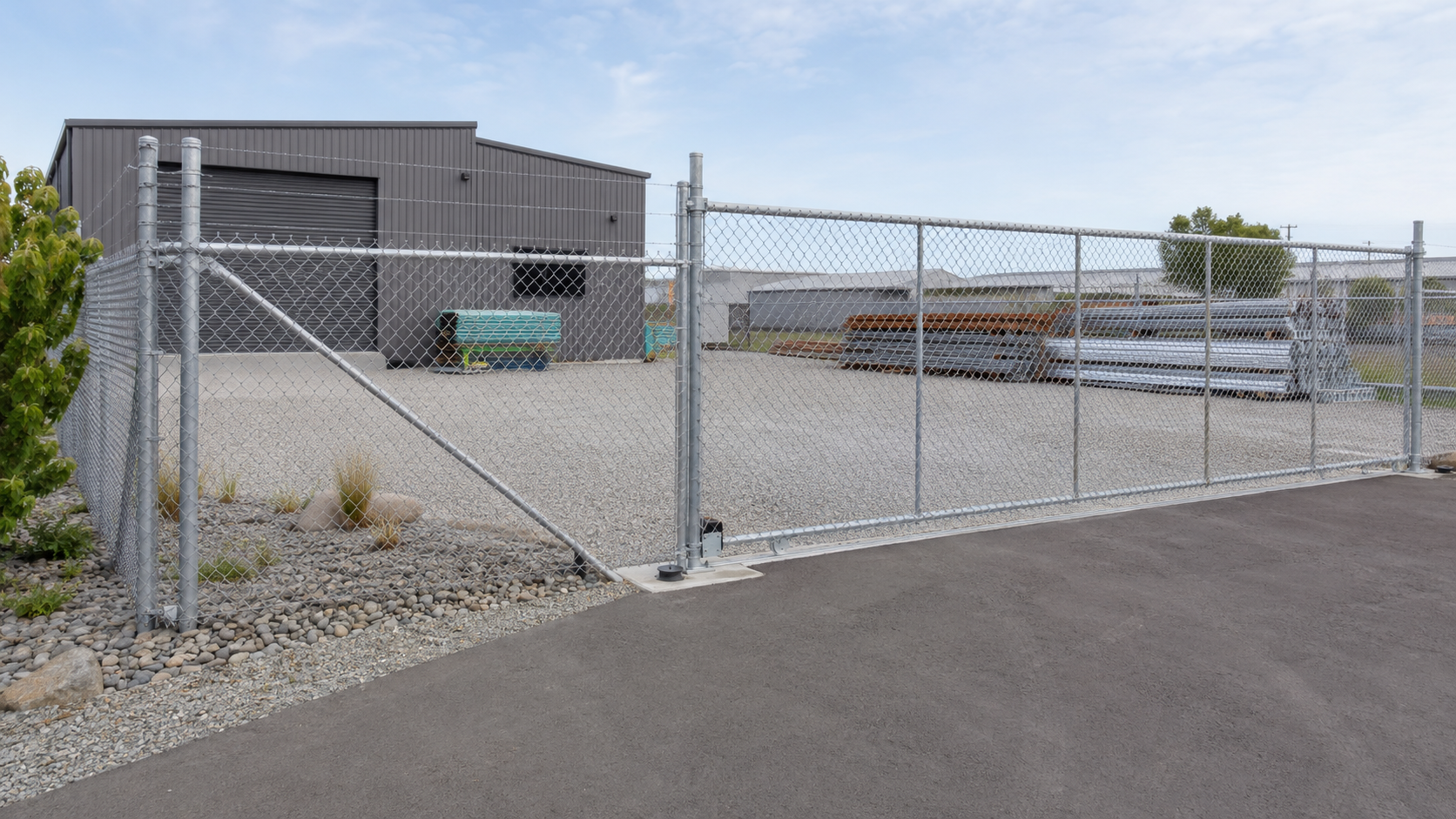
Residential or light-commercial chain-link fencing may cost $120–$280 per metre installed. Height, wire gauge, coating, top and bottom rails, tension wire, security toppings and ground conditions all affect the price.
Chain-link is practical rather than private. It suits:
- dog runs;
- schools and sports facilities;
- industrial yards;
- temporary compounds;
- boundaries where visibility is useful.
See chain-link fencing and commercial fencing.
Rural fencing cost
Basic rural post-and-wire fencing can begin around $45–$140 per metre, but the specification matters enormously. Stock type, wire count, post spacing, battens, strainers, terrain, access and electric components can produce very different totals.
Deer fencing, equine fencing, stockyard work and high-security rural boundaries should be priced from a detailed specification rather than a generic metre rate. See farm and rural fencing.
What Changes the Cost of a Fence?
Height and construction
A 1.2-metre front fence uses less material and catches less wind than a 1.8- or 2.0-metre privacy fence. Greater height can require:
- longer or stronger posts;
- deeper or larger footings;
- additional rails;
- heavier panels;
- more labour and lifting equipment.
Solid fencing generally has higher wind loading than an open picket, batten or mesh fence. The cheapest-looking panel is not always the cheapest compliant system for an exposed site.
Ground conditions
Soft soil is not automatically easy, and hard ground is not automatically impossible. Installers need to consider:
- rock, concrete or old footings;
- sand, peat, fill or unstable soil;
- underground services;
- tree roots;
- retaining walls;
- groundwater and drainage;
- slopes and sudden level changes.
Rock drilling, concrete cutting, hand excavation and larger engineered footings can add significant labour and plant costs.
Access
Direct vehicle access makes delivery and spoil removal easier. A rear boundary reached only through a narrow side path may require every post, bag of concrete and panel to be carried by hand. Restricted working hours, shared driveways and city-centre parking also affect productivity.
Design complexity
Straight, repetitive fencing is efficient. Stepped or raked sections, short returns, corners, custom transitions, matching screens and multiple gates take longer per metre.
Wind and coastal exposure
Exposed ridges and coastal properties may need stronger posts, closer spacing, appropriate fasteners and a coating system suited to the environment. Saving money by under-specifying these elements usually creates a much larger repair bill later.
Job size
Long runs often have a lower rate per metre. A three-metre screen still needs a site visit, delivery, set-up, excavation, concrete and clean-up, so its unit rate may look high even when the total is reasonable.
| Cost factor | Typical effect on price | What the installer checks |
|---|---|---|
| Extra height | Moderate to high | Wind load, post and footing size |
| Steep slope | Moderate to high | Stepped versus raked construction |
| Rock or concrete | High | Drilling, cutting and machinery |
| Narrow access | Moderate | Manual handling and spoil removal |
| Multiple corners | Moderate | Setting-out and additional posts |
| Coastal exposure | Moderate | Material, fixings and coating class |
| Retaining function | High | Engineering, drainage and consent |
| Automated gate | High | Power, safety devices and commissioning |
Realistic Fence Cost Examples
The examples below show how the metre price turns into a total project allowance. They are illustrations, not quotes.
Example 1: 20-metre timber boundary fence
- 20 metres of standard timber paling at $260/m: $5,200
- Removal and disposal of old lightweight fence: $700
- One standard pedestrian gate: $1,000
- Indicative project total: $6,900
Example 2: 30-metre steel privacy fence
- 30 metres of steel panel fencing at $330/m: $9,900
- Moderate slope allowance: $1,200
- One pedestrian gate: $1,300
- Indicative project total: $12,400
Example 3: 12-metre aluminium pool barrier
- 12 metres of compliant aluminium pool fencing at $480/m: $5,760
- Self-closing, self-latching gate: $1,600
- Consent and inspection-related costs: site-specific
- Indicative construction subtotal: $7,360, plus applicable council and documentation costs
Example 4: 15-metre frameless glass pool fence
- 15 metres of frameless glass at $850/m: $12,750
- Frameless glass gate and compliant hardware: $2,500
- Special fixing or substrate preparation: $1,000
- Indicative construction subtotal: $16,250
These examples also show why a quote should list gates, demolition, difficult excavation and consent work separately. A single blended metre rate can hide important assumptions.
Does Fence Cost Vary by Region?
Yes. Auckland and other high-demand urban markets often have higher labour, travel, parking and disposal costs. Remote sites may face freight and accommodation charges. Christchurch projects can involve site-specific ground or wind considerations, while Wellington’s steep sections and access constraints frequently affect labour.
The material itself may be similarly priced nationwide, but the installed price changes with:
- local labour availability;
- distance from the supplier;
- freight and ferry costs;
- disposal charges;
- topography;
- wind zone and exposure;
- council processes;
- parking and traffic management.
Do not apply an Auckland metre rate blindly to Tauranga, Wellington, Christchurch, Queenstown or a rural South Island site. Obtain a quote based on the actual property.
Fencing Materials Compared
| Material | Indicative installed cost | Maintenance | Privacy | Typical service life* | Best suited to |
|---|---|---|---|---|---|
| Treated timber | $180–$350/m | Medium | High | 15–30+ years | Flexible residential designs |
| Steel panel | $220–$450/m | Low | High | 20–30+ years | Privacy and low upkeep |
| PVC | $250–$500/m | Low | High | 20–30+ years | Clean, consistent appearance |
| Aluminium | $300–$900+/m | Low | Low to high | 25–40+ years | Frontages, pools, coastal sites |
| Chain-link | $120–$280/m | Low | Low | 20–30+ years | Security, pets and commercial sites |
| Glass | $550–$1,200+/m | Medium cleaning | Low visual obstruction | 20+ years | Pools, decks and views |
| Masonry | $700–$1,500+/m | Low to medium | High | 40+ years | Security, noise and premium boundaries |
*Service life is an indicative range, not a warranty. Exposure, specification, installation quality and maintenance can shorten or extend it.
Timber vs steel panel fencing
Choose timber when customisation, a natural finish or easier adaptation to a slope is important. Choose steel panels when you want uniform privacy and minimal coating maintenance.
Timber is easier to repair locally, but it needs periodic staining or painting if you want to control weathering. Steel does not rot, but coastal compatibility, scratched coatings and cut-edge protection require attention.
Aluminium vs steel
Aluminium is lighter and highly corrosion-resistant, making it useful near the coast and around pools. Steel is stronger for its section size and can be more economical in some solid-panel systems. The correct answer depends on the product, coating, wind exposure and required appearance.
Glass vs aluminium pool fencing
Glass preserves the view but costs more and shows salt spray, fingerprints and water marks. Aluminium usually costs less, is quicker to clean and offers a robust physical barrier, but interrupts the sightline. Both can be compliant when designed and installed as a complete pool-barrier system.
What Is Included in a Fencing Quote?
A professional quote should describe more than a price per metre.
Materials
Look for:
- exact fence type and height;
- post size, material and spacing;
- rails, palings, panels or wire specification;
- treatment or coating;
- fastener type;
- concrete or footing method;
- cap, trim and finish details;
- gate frame, hinges and latch.
Labour and equipment
The quote may include setting out, post-hole drilling, concrete cutting, installation, welding or fabrication, machinery and final clean-up.
Items that may be excluded
Confirm whether the price includes:
- GST;
- old-fence removal;
- tipping fees;
- surveyor costs;
- service locating;
- building or resource consent;
- engineering;
- vegetation removal;
- painting or staining;
- electrical work for gates;
- traffic management;
- reinstatement of paving or landscaping.
If two quotes differ sharply, compare the scope line by line. One contractor may have allowed for demolition, proper post sizes and waste disposal while another has not.
Old Fence Removal and Site Preparation Costs
Removing an old fence is often priced per metre or as a lump sum. A light timber or wire fence may be relatively quick to dismantle. Concrete posts, masonry walls, deep footings, asbestos-containing materials or embedded steel can be far more expensive.
As a broad allowance, straightforward fence removal and disposal may add $30–$100+ per metre. Heavy masonry, difficult access and contaminated or hazardous material require specialist assessment.
Other preparation costs can include:
- stump and hedge removal;
- pruning;
- breaking out concrete;
- filling old holes;
- levelling a narrow fence line;
- relocating irrigation;
- protecting neighbouring structures;
- confirming the legal boundary.
Never assume the existing fence follows the title boundary. Where the position is uncertain or disputed, use a licensed cadastral surveyor before construction. If the existing fence is sound but damaged, compare replacement against fence repairs.
How Much Do Fence Gates Cost?
Gates are priced by opening size, material, frame, hardware, access control and automation — not simply by fence type.
| Gate type | Indicative installed range |
|---|---|
| Basic timber pedestrian gate | $800–$1,800 |
| Aluminium or steel pedestrian gate | $1,200–$3,000 |
| Manual driveway gate | $3,000–$8,000+ |
| Automated swing or sliding gate | $7,000–$20,000+ |
| Custom architectural or commercial gate | Project-specific |
Automation may require:
- electrical supply;
- conduit and trenching;
- safety beams or edges;
- access control;
- intercom integration;
- concrete foundations;
- drainage for sliding-gate tracks;
- commissioning and servicing.
A cheap gate with an undersized frame or poor hinge geometry can become the most troublesome part of the fence. Specify adjustable hinges, suitable latches and corrosion-resistant hardware.
Consents, Boundaries and Sharing the Cost
Do fences need building consent?
Under Schedule 1 of the Building Act 2004, a fence or hoarding not exceeding 2.5 metres above the supporting ground is usually exempt from building consent. This exemption does not cover a barrier intended to restrict access to a residential pool.
That does not mean every 2.5-metre fence can be built as of right. District plans can impose lower permitted heights — often around 2 metres — and rules may differ for front yards, corner sites, heritage areas, coastal locations and sightlines. Resource consent may therefore be relevant even when building consent is not.
Check the current rules with your council before ordering materials: MBIE — fences and hoardings and MBIE — check if you need consents.
Pool barriers
Residential pool barriers are subject to specific Building Code and consent requirements. Gates must be self-closing and self-latching, and the surrounding area must not introduce climbable features that compromise the barrier. Pools are also subject to ongoing territorial-authority inspections.
Because compliance depends on the complete layout, have the design checked before buying panels or positioning a gate. Refer to Building Code Clause F9 (restricting access to residential pools) and your local council’s pool-barrier requirements.
Does a neighbour have to pay half?
The Fencing Act 1978 generally makes adjoining occupiers liable to contribute equally to the reasonable cost of an adequate fence, unless an agreement, covenant or other exception applies.
Your neighbour does not automatically have to fund half of a premium upgrade. If an adequate timber fence would serve the boundary but you want an expensive architectural wall, you may need to pay the difference.
Before starting work:
- Discuss the proposed fence and obtain written agreement.
- Confirm the boundary.
- Agree on type, height, cost, contractor, removal and timing.
- If agreement cannot be reached, follow the formal fencing-notice process.
- Do not begin non-urgent work and assume the cost can be recovered later.
Under the statutory process, the adjoining owner generally has 21 days to object or make a counter-proposal after receiving a compliant fencing notice. See the Fencing Act 1978 and Consumer NZ on fencing law.
How a Professional Fence Is Installed
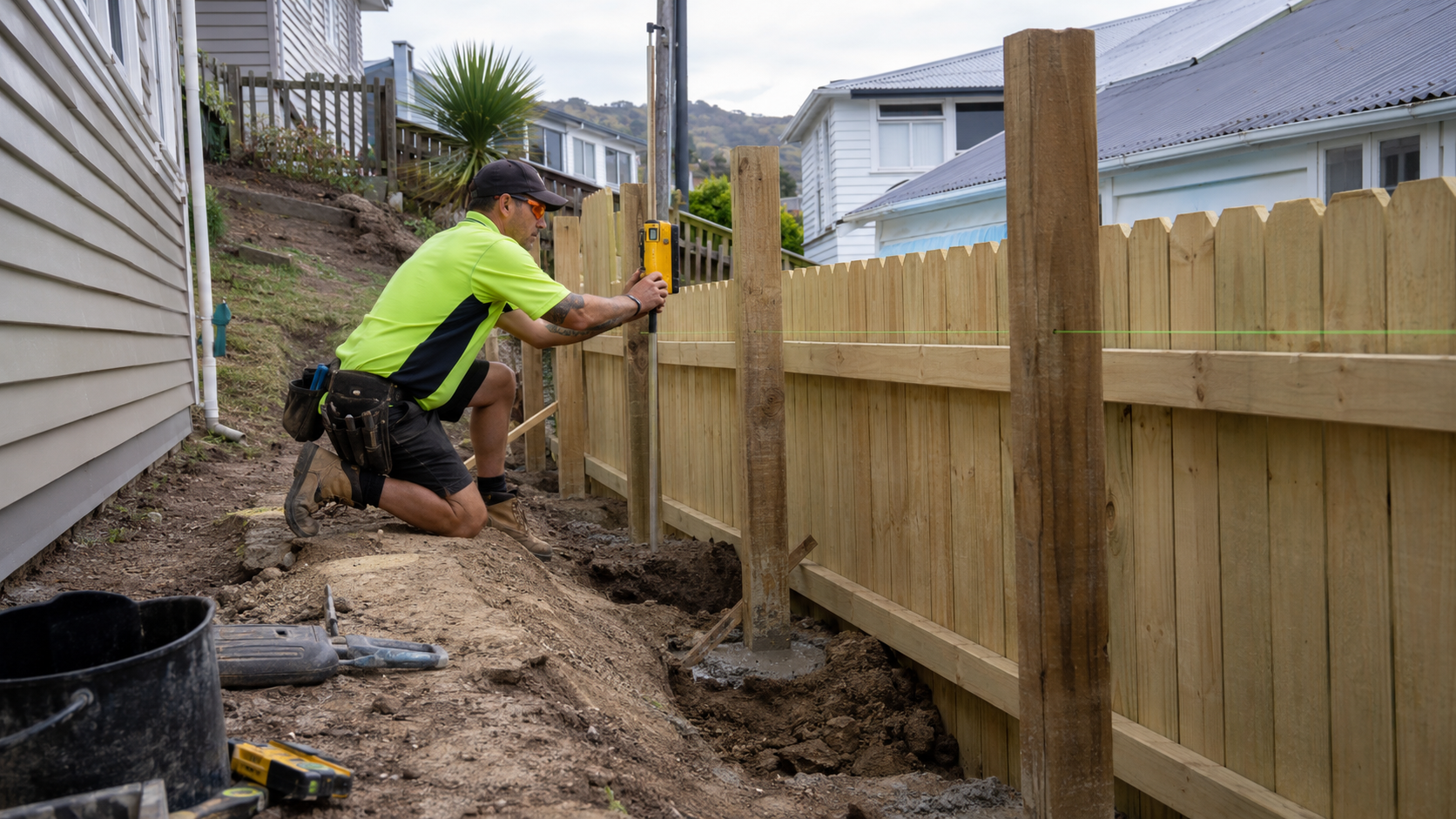
A well-run job follows the same nine stages, whatever the material.
Maintenance, Lifespan and Whole-of-Life Cost
The lowest initial quote is not necessarily the lowest long-term cost.
| Material | Routine maintenance | Key risk to manage |
|---|---|---|
| Timber | Wash; stain or paint periodically; check rails and posts | Moisture, rot, movement and coating failure |
| Steel panel | Wash; inspect scratches and cut edges | Corrosion where coatings are damaged |
| Aluminium | Wash, especially near salt exposure | Coating damage and incompatible fixings |
| PVC | Wash; inspect joints and caps | Impact, UV quality and loose components |
| Chain-link | Check tension, ties and corrosion | Sagging, damaged coating and loose posts |
| Glass | Frequent cleaning; check clamps, spigots and gate | Loose hardware and non-compliant gate action |
| Masonry | Clean; inspect cracks, drainage and coatings | Movement, moisture and foundation issues |
For coastal sites, regular fresh-water washing can materially improve the performance of coated metal. For timber, keep soil, mulch and persistent vegetation away from components that were not designed for ground contact.
Pool gates should be tested regularly. A gate that no longer self-closes and latches is a safety issue, not a cosmetic maintenance item.
How to Reduce Fence Cost Without Cutting Corners
Keep the design repetitive
Standard panel widths, straight runs and fewer transitions reduce labour and waste.
Use premium materials where they matter most
A practical boundary fence can be paired with a premium front fence and gate. This controls the total while preserving street appeal.
Clear access before the installer arrives
Agree in advance who removes plants, stored items and minor obstructions. Do not remove survey marks or disturb services.
Coordinate with the neighbour
A shared boundary project is easier when access, finish, cost and timing are agreed early.
Compare scope, not just totals
Ask every contractor to price the same height, materials, gates, demolition and finish. A vague low quote often grows through variations.
Plan before other landscaping
Install heavy posts and gates before new paving, lawns and planting where possible. This reduces reinstatement and damage.
Avoid false economies below ground
Posts, footings and drainage are difficult to upgrade after the fence is complete. If the site needs a stronger system, reducing footing quality is the wrong saving.
Common Fence Budgeting Mistakes
Measuring only the obvious boundary
Returns, corners, changes of level and gate openings all affect the quantity. Measure the complete line and let the installer verify it.
Assuming every price includes GST
For residential budgeting, confirm whether GST is included in every quote.
Ignoring demolition and disposal
An old fence can contain more concrete below ground than material above it.
Selecting by panel price alone
Panels may represent only part of the installed cost. Posts, rails, fasteners, concrete, delivery and labour can be equally important.
Failing to check the boundary
Rebuilding a fence in the wrong place can cost far more than a survey.
Starting before neighbour agreement
A verbal assumption about splitting the cost is not a reliable project plan.
Treating a retaining wall as a normal fence
A structure holding back soil has different structural, drainage and consent considerations. Fence pricing should not be used as a retaining-wall estimate.
Forgetting gate use
A narrow gate, poor swing direction or badly placed latch can make an otherwise good fence frustrating every day.
Using an online calculator as a quote
Calculators are useful for early budgeting. They cannot see rock, roots, access, services, wind exposure or a disputed boundary.
Expert Tips From a New Zealand Fence Installer
- Tell the contractor what the fence must do. Privacy, pool safety, dog containment, wind reduction and security lead to different specifications.
- Photograph the fence line from both ends. Include gates, slopes, vegetation and access in your quote request.
- Ask how the fence handles wind. This is essential for tall solid fences and exposed properties.
- Specify the finish on both sides. A neighbour-facing elevation may look different from the rail side of a standard timber fence.
- Confirm treatment and coating details in writing. “Timber fence” or “metal fence” is not a complete specification.
- Check gate posts separately. Gates impose concentrated loads and often need stronger posts and footings.
- Allow contingency for hidden ground conditions. Around 10–15% is sensible on renovation sites where old concrete, rock or services are uncertain.
- Get consent advice early. Redesigning a non-compliant pool barrier or over-height front fence after ordering is expensive.
- Ask for exclusions. A clear exclusions list is as valuable as the inclusions.
- Do not buy materials before the site is checked. Panel modules, height changes and corner details can alter quantities.
Get an Accurate Fence Quote
A metre rate is useful for setting a budget, but the final cost depends on your property. The fastest way to obtain a meaningful price is to provide:
- the property address;
- approximate fence length and height;
- preferred material;
- photos of the complete fence line;
- the number and size of gates;
- whether an old fence must be removed;
- any known rock, retaining walls, services or access limits.
We can then assess the site, recommend a suitable specification and provide a clear written quote. Request a free fence quote, browse our fencing services or read about fence repairs.
Conclusion
In 2026, a realistic starting allowance for professionally installed residential fencing in New Zealand is $180–$500 per lineal metre. Material matters, but height, wind exposure, access, slope, excavation, gates and demolition often explain the biggest difference between an online estimate and a contractor’s quote.
Choose a fence by its job, not just its metre rate. A clear specification, confirmed boundary, council check and written agreement with the neighbour prevent the costliest mistakes. Once those details are known, a site-based quotation can turn the broad ranges in this guide into an accurate project budget.