Deciding how to extend your living space into the outdoors is one of the most significant home improvement decisions an Auckland homeowner can make. In New Zealand, our lifestyle is deeply connected to the "indoor-outdoor flow," but our weather is notoriously unpredictable. Two of the most popular choices are traditional timber or composite decks and modern glass-enclosed verandas (often called summer rooms). Each offers a distinct set of benefits, costs, and maintenance requirements.
A deck is the quintessence of the Kiwi backyard. Whether it’s a small platform for a BBQ or a multi-level expanse wrapping around a villa, a deck provides a seamless transition from the home to the lawn. In Auckland, where the terrain is often sloping, decks are the primary solution for creating usable level space on hillsides.
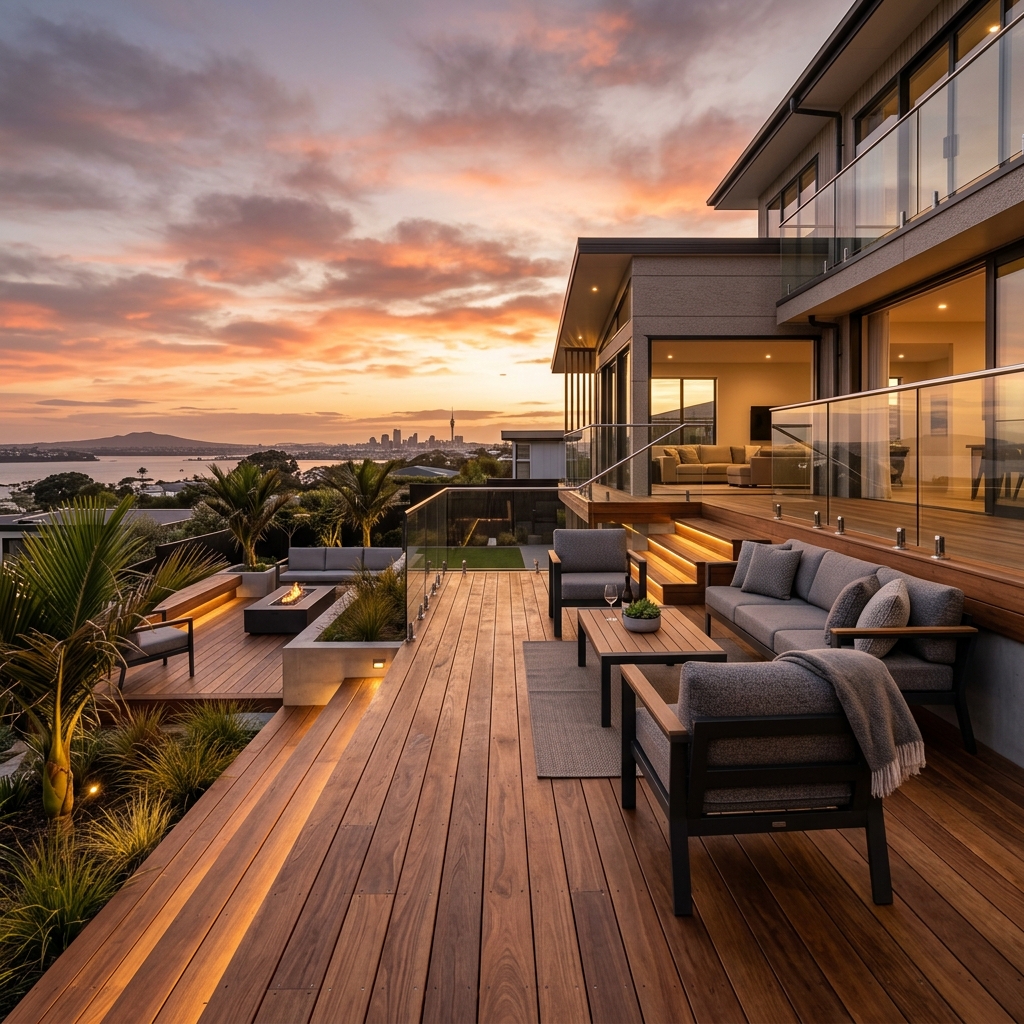
A well-built timber deck provides a natural, open feel for summer entertaining.
Unmatched Freshness: There is nothing quite like sitting on an open deck during a warm Auckland evening. You get the full benefit of the breeze and the direct connection with your garden.
Cost Effective: Generally, building a deck has a lower initial cost per square meter than a fully enclosed veranda. Timber options like Kwila or Vitex are premium, but standard pressure-treated Pine is very accessible.
Versatility: Decks can be built in almost any shape and can incorporate built-in seating, planters, and even outdoor kitchens.
The main drawback is exposure. Auckland’s "four seasons in one day" means that a planned BBQ can be ruined by a sudden downpour. Decks are also subject to intense UV radiation, which causes timber to silver and crack over time, necessitating regular oiling or staining.
A summer veranda is a more architectural approach. These are typically roofed structures, often with glass walls or bi-fold doors, that effectively create a new "hybrid" room. It’s too airy to be a lounge but too protected to be a traditional porch.
Verandas allow you to enjoy your outdoor space even when the Auckland weather isn't cooperating.
Year-Round Utility: This is the biggest selling point. With a glass veranda, you can enjoy your morning coffee with a view of the garden even in the middle of a winter storm. In the summer, you can open the doors wide for full airflow.
Furniture Protection: Your outdoor furniture stays dry and protected from UV rays. This means you can use high-spec indoor-style fabrics and lounges without worrying about mold or fading.
Property Value: A well-integrated veranda is often seen as a significant architectural addition, potentially adding more to the resale value of your home than a standard deck.
The primary challenge is the investment. A glass veranda requires professional engineering, high-quality materials, and often a more complex building consent process. It also creates a "greenhouse" effect, which is lovely in winter but requires smart ventilation options in the height of an Auckland summer.
| Feature | Timber Deck | Summer Veranda |
|---|---|---|
| Weather Usage | Dry days only | 365 days a year |
| Maintenance | High (Staining/Cleaning) | Low (Cleaning glass) |
| Initial Cost | Medium | Premium |
| Privacy | Depends on screens | Inherent (Glass/Walls) |
At Kiwi Fencing Co, our most successful projects often combine both elements. We frequently build a central glass veranda for protected dining and lounge use, which then flows out onto an open timber or composite deck for BBQing and sunbathing. This "best of both worlds" approach ensures that your outdoor investment is usable no matter what the clouds are doing.
Planning an extension like this requires a keen eye for Auckland’s building codes and regional plans. Our experts can help you design a layout that maximizes your sun exposure while providing the necessary shelter from South-Westerly winds.
Not sure if your site is better suited for a deck or a veranda? Get a professional site measure and custom design proposal.
Looking for more design inspiration? Read our guide on Top Coastal Fencing Materials or learn about Modern Pergola Designs.