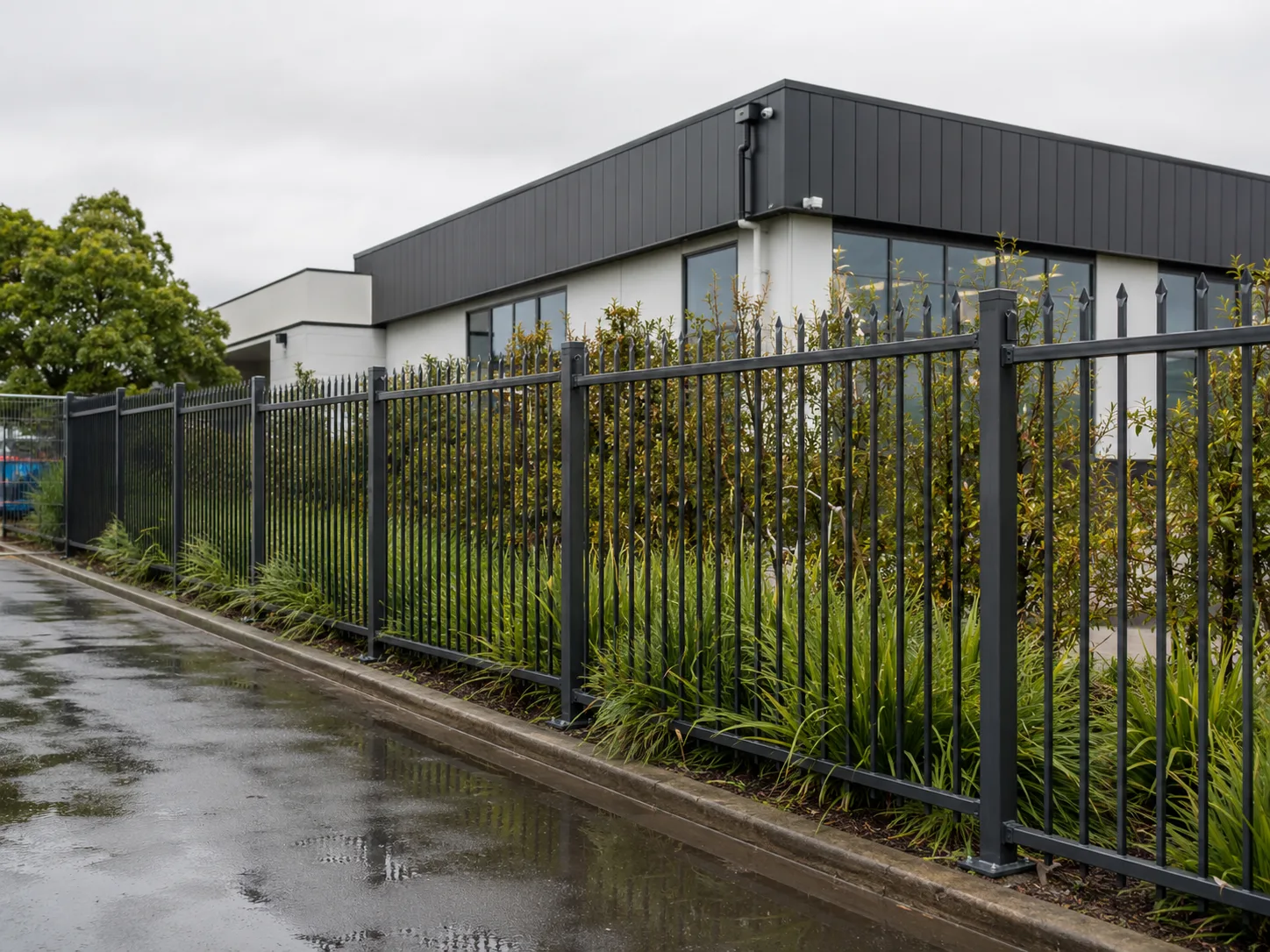
Compare the same panel quantity and hire period, then add installation, delivery, collection and any required bracing or gates. A headline weekly rate is not the total project budget.
What does the complete project cost?
Temporary fence hire is a time-based service, not a permanent installed fence priced once per metre. The total depends on panels, hire duration, minimum periods, delivery, installation, bracing, gates and collection. Comparing a weekly panel rate with a monthly metre rate without converting the units can make a reasonable quote look unexpectedly expensive.
Compare the same panel quantity and hire period, then add installation, delivery, collection and any required bracing or gates. A headline weekly rate is not the total project budget.
| Illustrative hire budget | Calculation | NZD including GST |
|---|---|---|
| Panels for a nominal 50 m line | 21 × 2.4 m panels; final layout to confirm | 50.4 m nominal coverage |
| Four-week hire | 21 × $5 × 4 × 1.15 | $483 |
| Delivery and collection | Assumed combined allowance | $350 |
| Installation and dismantling | Assumed separate allowance | $250 |
| Example total | Excludes damage, extensions and specialist bracing | $1,083 |
The specification to put on every quote
A temporary hire quotation should identify the following details before a total is treated as comparable. If a supplier uses a proprietary system, request the name and installation information so future variations remain consistent with it.
| Decision | What to specify |
|---|---|
| Hire unit | State panel width, metres, week/month and minimum term |
| Installation | Identify feet, clamps, braces and approved layout |
| Access | Price pedestrian and vehicle gates separately |
| Duration | Record start, extension and collection rules |
| Risk | Confirm responsibility for damage, loss and relocations |
Convert the hire units before comparing suppliers
A published supplier example lists a weekly rate per panel, while other suppliers quote per metre per month. A 2.4 m panel rate needs to be divided by its stated width before it resembles a metre rate, and a monthly amount cannot simply be compared with one week of hire. Confirm GST and minimum duration at the same time.
For example, 21 panels at an assumed $5 excluding GST per panel per week for four weeks gives $420 excluding GST, or $483 including GST, before delivery and other items. The $5 figure is a published example from Temp Fencing Ltd, not an offer by Kiwi Fencing. Confirm its current specification and availability directly rather than assuming it applies to every hire period or city.
Feet, bracing, screening and the working site
A freestanding temporary fence needs a suitable layout and support system. Bracing, wind exposure, ground conditions, pedestrian routes and vehicles affect the arrangement. Do not add banners or privacy cloth without checking the extra wind demand and the supplier’s instructions. A temporary barrier that falls into a footpath can create a new risk rather than manage access safely.
Decide which gates need to remain usable during the hire. A site entrance may change as construction progresses, requiring relocation or additional panels. Establish who is authorised to move components and what the supplier charges for a return visit. Temporary pool barriers have their own requirements; ordinary construction panels should not be assumed appropriate for pool safety.
Extensions, collection and damage charges
The return date is part of the cost model. If the job is delayed, ask whether hire extends automatically and whether part-period charges apply. Agree how much notice the supplier needs for collection and whether access must remain available for the truck. A panel can continue to incur hire if collection is prevented by stored materials or an inaccessible gate.
Record the delivered quantity and condition, and clarify responsibility for missing clamps, damaged feet or stolen panels. Compare an outright purchase only after allowing for transport, storage, maintenance and eventual disposal or resale. Hiring may be simpler for a single short project, while a business with repeated work needs a fuller utilisation calculation.
Material-specific delivery and handling
Delivery and collection can be larger than the hire line on a short job. Ask whether the price includes both trips, installation, dismantling and a practical loading area. Moving the same fence to another stage or property is generally a new task, not an automatic inclusion in the original hire rate.
On a temporary hire project, responsibility for ordering, measurements and damaged components needs to be clear. If the owner supplies materials, confirm that the installer accepts the specification and quantities before placing the order. A rejected or incomplete delivery can delay a crew and leave a temporary boundary problem. Photograph delivered items and retain the product details, but do not assume delivery damage will be resolved automatically after installation.
Define the fence before comparing prices
A price per metre is meaningful only when it describes the same completed fence. Write the length, finished height, layout, material system and gate requirements at the top of each quotation. A short return, a large corner post and a gate opening do not behave like another metre of a straight run. Record them separately so a low headline rate cannot conceal a different scope.
Ask whether the height is measured from the lower or higher side where ground levels differ, and whether the quoted finish includes caps, trims, coatings and fixings. A photograph of the desired appearance helps, but it cannot specify footing size, structural capacity or a corrosion environment. Those decisions need the actual site and the selected manufacturer’s installation information.
For a replacement, state whether the old posts and concrete are being removed or left below a safe finished level. Compare repair as well as replacement where the existing structure is serviceable. An installer can explain the construction; a dispute over the legal boundary needs a separate resolution. Keep an agreed scope with the quote so later changes can be priced before they are carried out.
Wind, coastal exposure and product warranties
Solid cladding provides privacy but also presents an area to the wind. An open fence may reduce that area, yet openness alone is not a structural design. Height, post spacing, connections, footing capacity and local exposure must work together. A sheltered courtyard and an open ridge in the same city can need different details. Choose the support system before finalising the decorative finish.
At a coastal or salt-exposed site, ask the supplier to identify the permitted exposure category, coating and maintenance regime for the exact product. Stainless steel, galvanised steel and aluminium are not interchangeable labels for unlimited durability. Connections between dissimilar materials and damaged coating edges need suitable details. Check whether the written warranty covers the actual property, not simply whether the brochure mentions coastal use.
Keep a record of product names, coating colours, maintenance instructions and any exclusions. Washing salt deposits, clearing vegetation and repairing damage may be conditions of continued performance. Do not assume rain reaches sheltered faces or removes all contamination. If a quote proposes a cheaper component, ask whether the complete system remains supported by the manufacturer. A small saving on unsuitable fasteners can undermine an otherwise good installation.
How to compare quotations without comparing different jobs
Request a written scope rather than choosing between two totals on a phone screen. Each quote should show the same fence length and height, material specification, foundations, gates and finish. Ask whether GST is included, how long the price remains valid and what is required before the construction date can be confirmed. Delivery and demolition should not disappear inside an undefined “installation” allowance.
Separate fixed work from provisional items. An excavation allowance is useful only if the quote explains the assumed conditions and how additional time or equipment would be charged. Ask for approval before variations proceed and keep photographs of the relevant condition. A quote with a realistic allowance may be more dependable than a lower total that excludes every uncertain part of the project.
Agree who arranges boundary confirmation, planning checks and any specialist design. If costs are shared, record the owners’ agreement separately from the installer’s payment terms. Do not assume the contractor will collect a neighbour’s share. Check the proposed deposit, progress payments, handover information and process for correcting defects. The goal is a buildable, clearly described fence at a comprehensible price, rather than the smallest number on the first page.
Maintenance, repair and whole-of-life cost
The lowest initial price is not necessarily the least expensive fence to own. Compare the work required to keep each system performing: coatings, washing, vegetation clearance, gate adjustment and replacement hardware. Include access costs if maintenance requires working above a retaining wall or reaching a difficult boundary. A recurring small task can become expensive when safe access is complicated.
Set a realistic inspection routine and also check the fence after significant impact or severe weather. Look for movement at posts, loose connections, corrosion, damaged finishes, soil building up against components and gate problems. Investigate why damage occurred before replacing the visible part. A new panel fitted to a moving foundation is unlikely to be a lasting repair.
Keep spare product details so future repairs can match colours, profiles and hardware. Ask whether individual components remain available and whether a replacement requires removing adjacent sections. For timber, discuss suitable treatment and coating schedules; for metal or PVC, follow the specific cleaning and repair instructions rather than applying a generic “maintenance-free” promise. Price anticipated maintenance alongside the installation, but treat lifespan figures as conditional expectations, not guaranteed dates.
Boundary agreements, consent and pool barriers
Three different checks often get confused: where the boundary lies, what you and your neighbour have agreed to pay, and whether the proposed construction is permitted. Agreement between neighbours does not override the Building Code or the local plan. Likewise, a consent or exemption does not settle who owns a strip of land. Deal with these questions before ordering a non-returnable system.
MBIE describes a building-consent exemption for qualifying fences and hoardings no higher than 2.5 metres, but it is not a universal permission for every fence under that height. Planning rules, road visibility, heritage conditions, retaining work and pool-barrier requirements can create separate constraints. Use the property’s actual council information and the complete proposal, including trellis or changes in ground level.
If a fence also restricts access to a residential pool, it must be assessed as a complete barrier, including gates, nearby climbable features and adjacent boundaries. Do not extrapolate ordinary boundary-fence details into pool compliance. For shared costs, follow a written agreement or the applicable Fencing Act process before expecting to recover money. Our consent and neighbour-cost guides explain these checks separately so a price estimate is not mistaken for legal approval.
Compare the alternatives for the same job
Use the same boundary, finished height, gates and exposure when comparing temporary hire with another system. An alternative that reduces maintenance may change privacy, wind loading, future repairs or the foundation design. Ask what the cheaper proposal omits before treating the difference as a saving.
The national fence cost guide provides a wider comparison, while our best fence materials guide explains the practical trade-offs. If a pool or retaining wall is involved, compare the complete compliant or designed structure rather than substituting an ordinary garden-fence allowance.
A staged project needs its own budget. Allow for end posts, safe temporary access, repeat delivery and the connection between stages. Retaining an unsuitable old section only to reduce the initial invoice can make the final layout more expensive to finish. Agree which elements can remain serviceable and which need to be replaced together.
What happens during a properly planned installation
The first stage is set-out: confirm the agreed boundary, ends, corners, gates and finished levels before excavation. Record the existing condition of nearby surfaces and discuss access with everyone affected. Identify services and any restrictions on working hours or shared driveways. Delivery should follow the plan rather than arrive before there is a safe place to unload.
Excavation and post installation establish the geometry. The installer checks alignment and levels before fixing rails, panels or infill. Concrete and other foundations need appropriate curing or installation conditions; the calendar cannot be determined by fence length alone. Gates are adjusted after the surrounding structure is ready, with attention to hinges, latches, clearances and the way the ground drains beneath the opening.
At handover, walk the entire boundary with the installer. Check loose components, sharp edges, damaged coatings and unfinished ground. Operate gates several times and ask how seasonal movement or routine adjustment should be handled. Obtain product and maintenance information and the final scope of any guarantee. For pool barriers, a practical handover is additional to the required consent or inspection process, not a replacement for it.
Where to save money without removing essential work
Begin with the actual purpose of the fence. A long private side boundary may need a simple repetitive layout, while the street frontage needs a more carefully finished entrance. Using a premium finish selectively can save more than reducing post quality across the whole job. Keep gate positions and corners deliberate: repeated short sections and unnecessary custom cuts increase labour without necessarily improving function.
Prepare access and decide the design before the crew arrives. Remove only the vegetation and obstacles that you are authorised and able to remove safely; do not disturb protected trees, services or uncertain boundary markers. Consolidate deliveries where storage allows. If timing is flexible, ask the installer about a practical programme, but do not assume an off-season discount or agree to unsuitable ground conditions merely to meet a price.
Avoid savings that move risk below ground or into missing scope. Undersized foundations, incompatible fixings, omitted drainage and incorrect timber treatment can cost far more to rectify than the initial difference. A sensible phased project has safe temporary boundaries and clearly planned connections between stages. Decide what can be deferred, price the return visit and record responsibility for the unfinished sections.
Frequently asked questions
Is hire charged by the week or month?
Either can occur. Check the stated unit, panel width, minimum period and GST, then convert both quotes to the same length and duration before comparing.
Can I move panels myself?
Only under the agreed hire conditions and a suitable safe layout. Moving feet or removing braces can affect stability and may create additional charges or liability.
Is construction fencing suitable around a pool?
Do not assume so. Ask for a system expressly suitable for the applicable pool-barrier requirements and obtain the necessary approvals.
Does the price include GST and freight?
The editorial installation allowances here include GST, but supplier quotations may be presented differently. Freight, unloading and internal handling must be explicitly included or shown as separate amounts; do not assume a supplier’s panel price includes them.
What information helps obtain a useful estimate?
Send the city or suburb, approximate length, desired height, intended use and photos of the boundary and access. Mention existing fences, slopes, gates and any pool or retaining structure. Exact pricing requires a confirmed temporary hire specification and site assessment.
Is the cheapest quote necessarily the best value?
Only comparable scopes can be judged on price. Check the complete support system, exclusions, variation process and repairability. A clear realistic quote can be better value than an attractive rate that omits necessary work.
Sources and further reading
Reviewed on 20 October 2026. Follow current official documents and the selected product’s requirements for the actual property. Worked examples are explicitly illustrative; no completed project or customer endorsement is implied.