Choosing a fence isn't just about privacy or good looks — in New Zealand it also means dealing with wind exposure, salt air near the coast, boundary rules under the Fencing Act 1978, and, if you've got a pool or spa, strict compliance with the Building Act's pool fencing requirements. Get the material wrong and you could be repainting timber every two years, or watching a cheap aluminium panel buckle in a Wellington northerly.
This guide breaks down every common fence type used across NZ — timber, Colorsteel, aluminium and Colorbond, PVC, chain link, glass, concrete block, gabion and rural wire — with real cost ranges, lifespan expectations and the trade-offs installers don't always mention upfront. Whether you're fencing a quarter-acre section in Hamilton or a coastal property in the Bay of Plenty, you'll find the specifics you need to make the right call.
Quick answer: for most NZ homeowners, timber paling fences remain the most popular choice for a balance of cost (roughly $150–$300 per linear metre installed) and kerbside appeal, while Colorsteel fencing is the better pick for durability, low maintenance and wind resistance, especially in exposed or coastal areas. Pool owners must use a compliant pool fence — glass, aluminium or mesh — meeting Building Code Clause F9 regardless of style preference. The right fence ultimately depends on your budget, boundary type, council rules and how much upkeep you're willing to do.
Overview of Fencing Options in New Zealand
New Zealand's climate isn't uniform, and neither is its fencing. A fence that performs well in inland Canterbury might corrode within a decade on the Kāpiti coast. Before picking a style, it helps to understand the main categories installers work with:
- Timber — paling, board-and-batten, post-and-rail
- Steel — Colorsteel profiled panels, powder-coated steel
- Aluminium — slat panels, Colorbond-style aluminium
- PVC and vinyl — moulded panel systems
- Wire and mesh — chain link, weldmesh, deer fencing
- Glass — frameless or semi-frameless pool and view fencing
- Masonry — concrete block, brick
- Gabion — stone-filled wire cages
- Rural — post-and-wire, electric, deer and stock fencing
Our fence cost guide can help you set a rough budget before reading further, and the fencing calculator lets you estimate linear metres for your section.
Timber Fencing
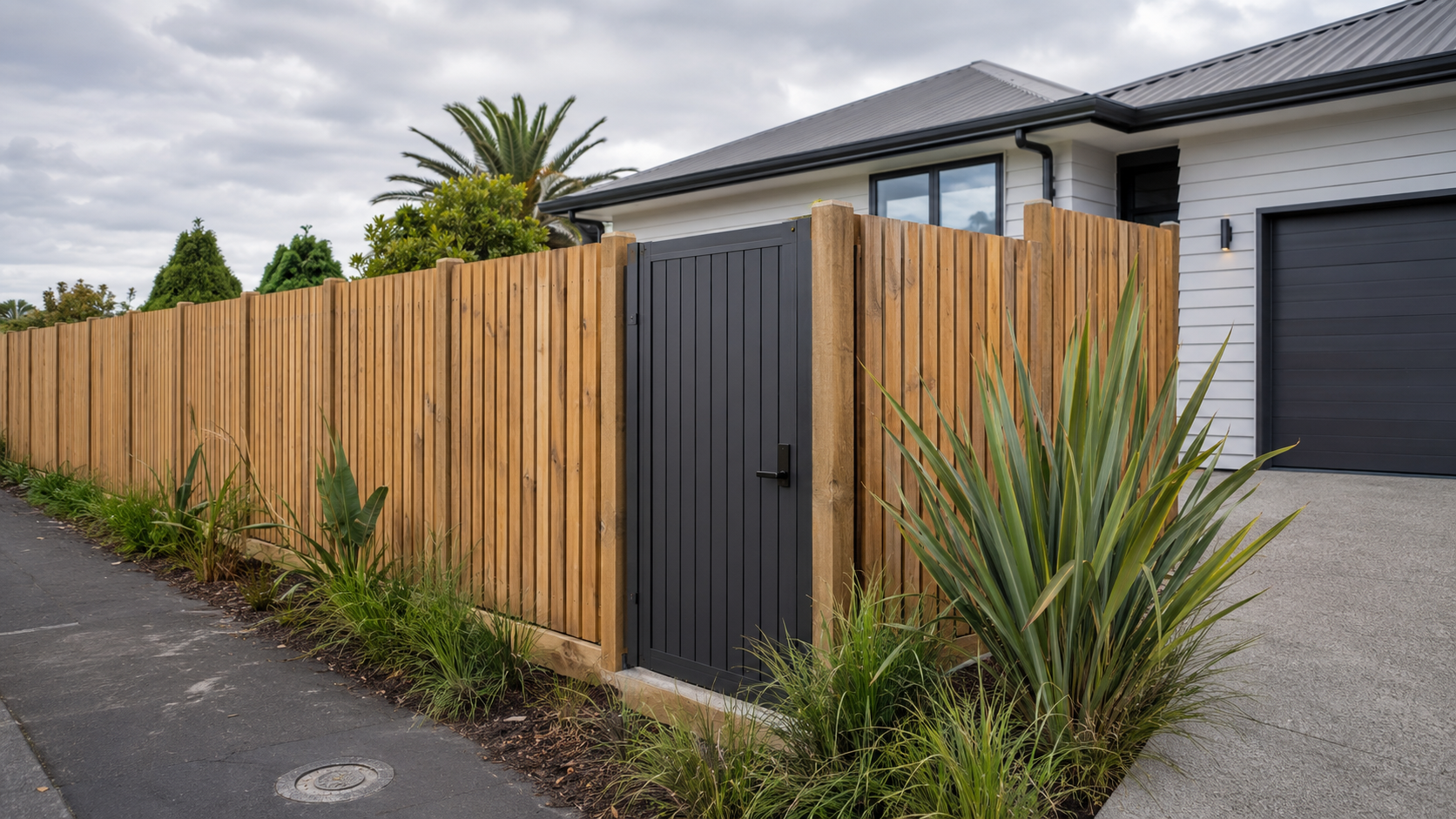
Timber is still the default choice for residential boundary and privacy fences across NZ, especially in suburban Auckland, Hamilton and Christchurch.
Common timber styles
- Paling fences — vertical boards, the most common NZ boundary fence
- Board-and-batten — overlapping battens for extra privacy and wind resistance
- Post-and-rail — open style, common on lifestyle blocks
- Feature fencing — horizontal slats, often mixed with aluminium for a modern look
Benefits
- Natural, warm aesthetic that suits most NZ homes
- Easy to repair section by section
- Widely available H3.2 and H4 treated pine keeps costs down
- Can be stained or painted to match any exterior
Drawbacks
- Requires repainting or staining every three to five years
- H4 treated timber is essential below ground — untreated posts rot within a few years
- Vulnerable to borer and rot in damp, shaded sections
- Shorter lifespan near the coast unless hardwood or properly treated timber is used
Our timber fencing page covers paling height rules and treatment grades in more depth.
Colorsteel Fencing
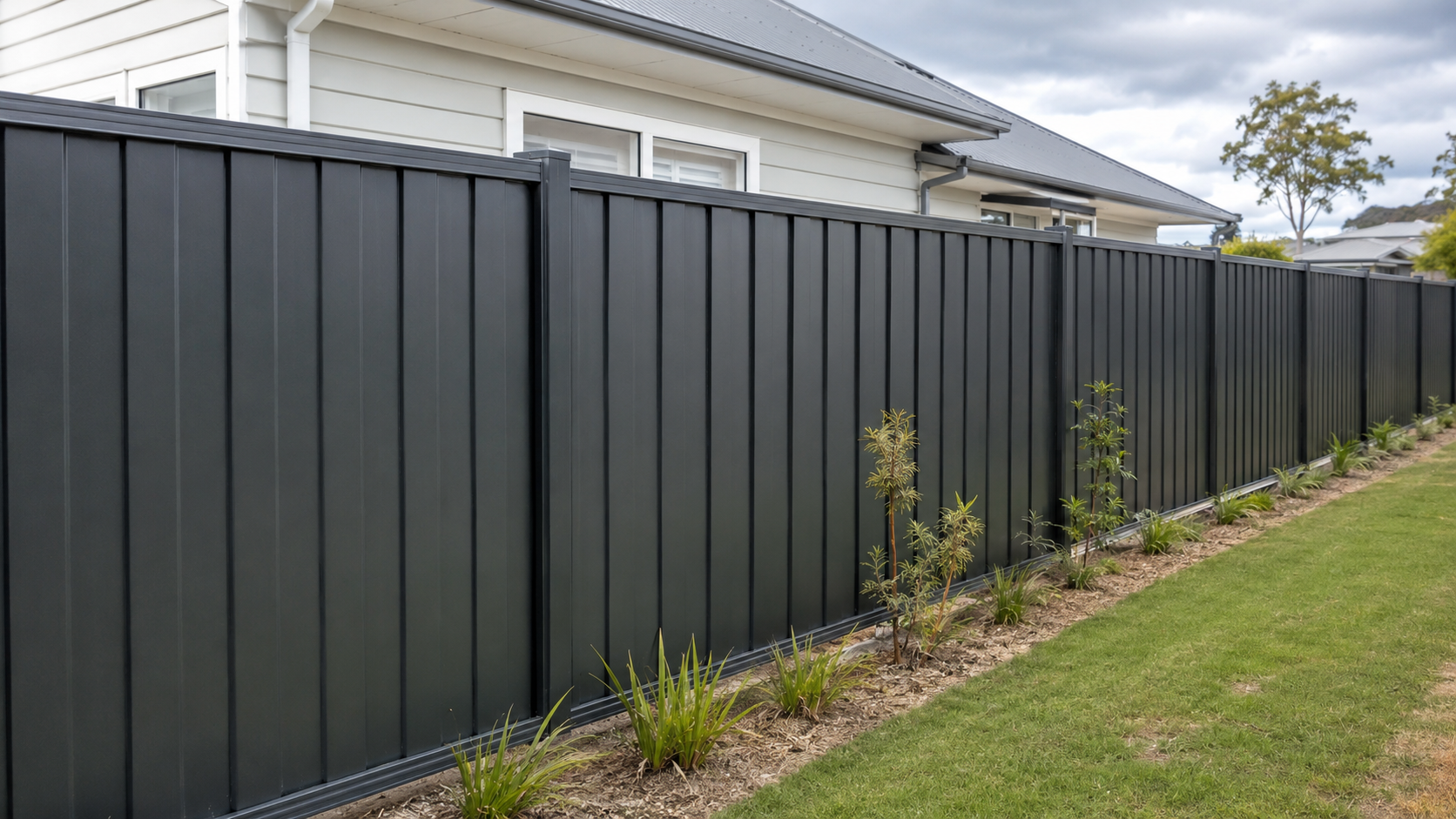
Colorsteel, a New Zealand Steel product, has become the go-to option for homeowners wanting a low-maintenance, modern boundary fence that survives wind, salt spray and UV without fading quickly.
Benefits
- Extremely durable — a 25+ year lifespan is common with proper installation
- Excellent wind resistance, ideal for exposed sites and rural boundaries
- Low maintenance — no painting or staining required
- Wide colour range (Ironsand, Grey Friars, Ebony) to match roofing
Drawbacks
- Higher upfront cost than timber
- Can dent from impact — trolleys, balls, vehicles
- Cut edges need re-coating to prevent rust
- A less natural look, which some heritage-zoned properties can't use
See our Colorsteel fencing guide for profile options and colour charts.
Aluminium and Colorbond Fencing
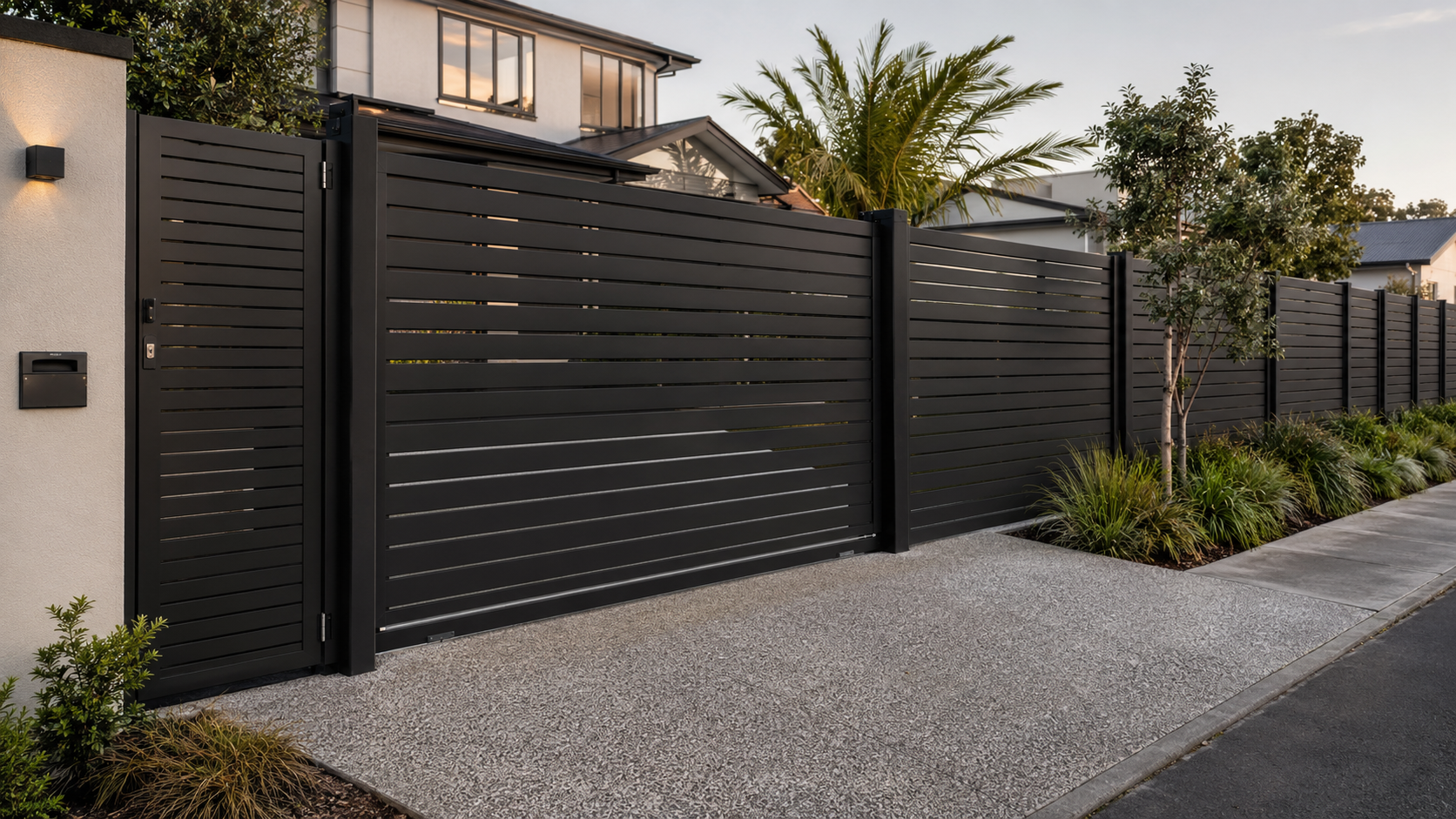
Aluminium slat fencing and Colorbond steel panels are frequently used together — Colorbond for solid privacy panels, aluminium slats for a more architectural, semi-open look.
Benefits
- Won't rust like untreated steel
- Lightweight, so easier and cheaper to install than masonry
- Slat spacing can be adjusted for privacy versus airflow
- Popular for modern builds and pool surrounds
Drawbacks
- Slat panels offer less wind and noise blocking than solid fencing
- Can look cold without landscaping to soften it
- Premium powder-coated finishes cost more than basic Colorsteel
PVC and Vinyl Fencing
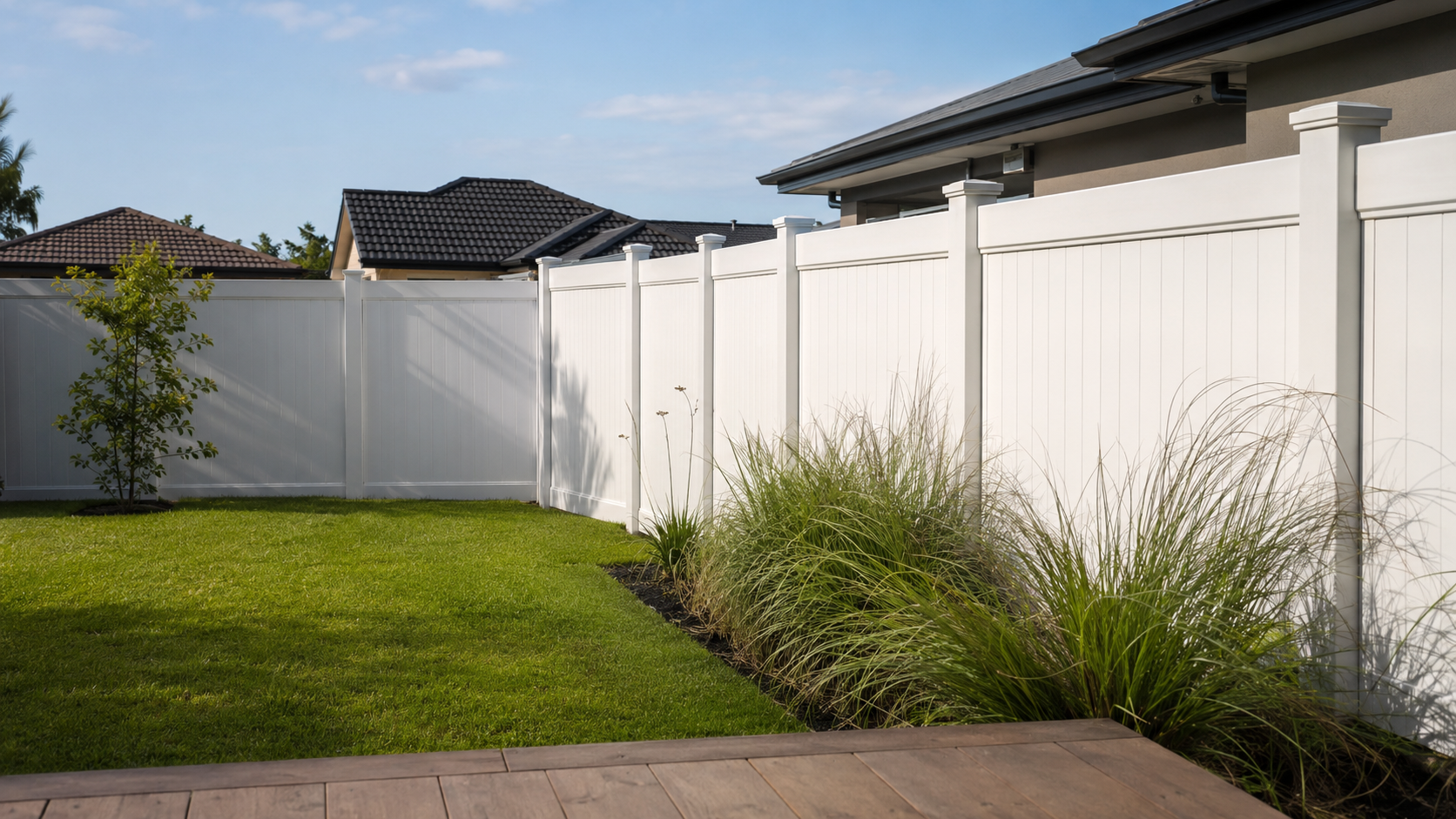
Less common in NZ than in Australia or the US, but growing in popularity for pool surrounds and low-maintenance boundary fencing.
Benefits
- Never needs painting — simply hose it down
- Resistant to borer, rot and rust entirely
- A good option for pool fencing when paired with compliant gates
Drawbacks
- Higher cost per metre than timber
- Can become brittle in high-UV areas over 15+ years
- Limited supplier network compared with timber and steel — expect longer lead times
More detail on our PVC fencing page.
Chain Link and Mesh Fencing
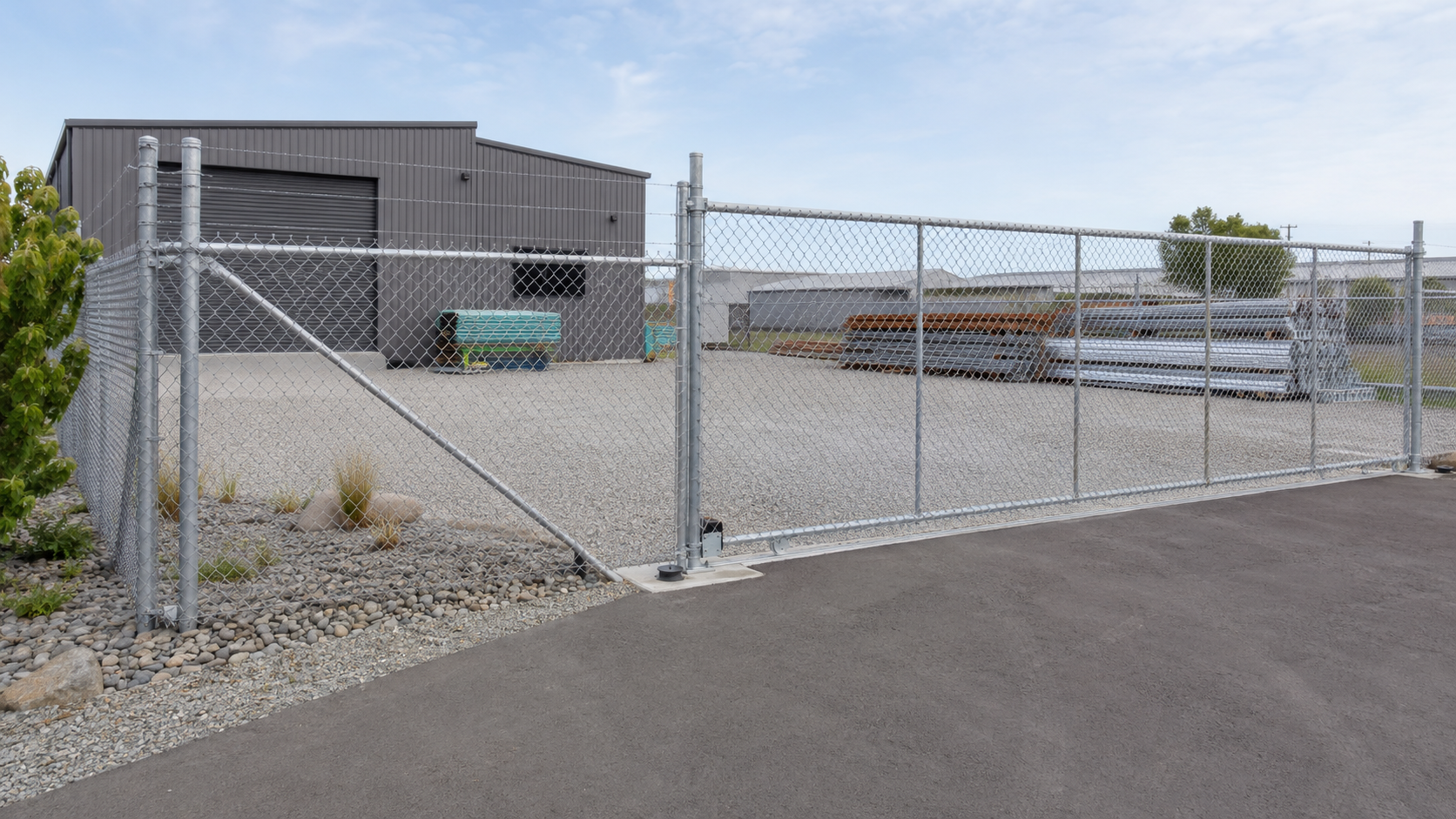
Chain link and weldmesh fencing are common on commercial sites, construction perimeters and rural boundaries where security matters more than aesthetics.
Benefits
- Cheapest fencing option per linear metre
- Fast to install over long distances
- Doesn't block wind, which is useful on exposed rural boundaries
- Weldmesh options can still meet pool fencing compliance
Drawbacks
- Minimal privacy
- Visually industrial — rarely used for front-of-house residential fencing
- Chain link alone does not meet Building Code pool fencing gap requirements without added infill
Our chain link fencing and commercial fencing pages cover security mesh and temporary construction fencing options.
Glass Fencing
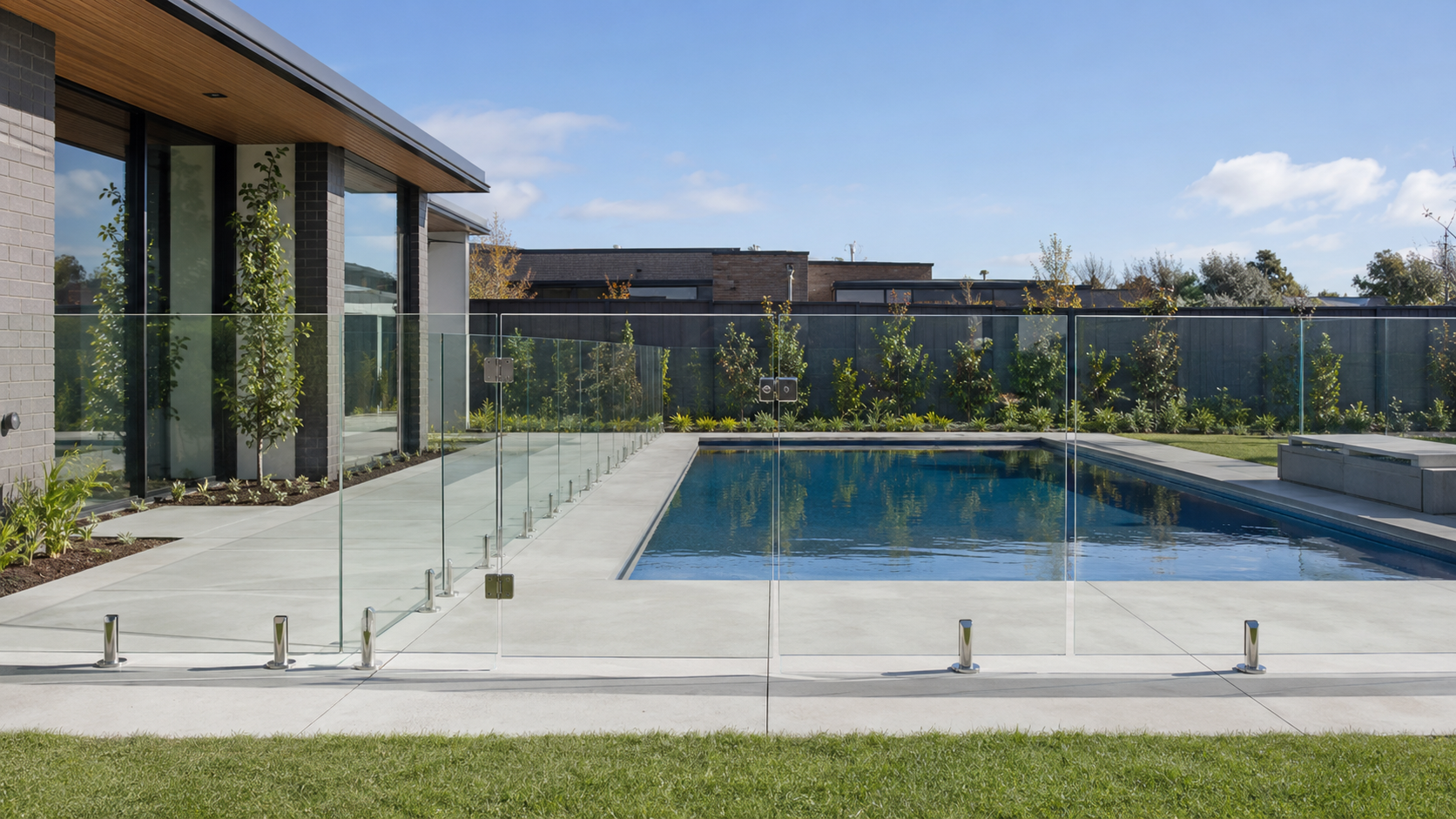
Frameless and semi-frameless glass fencing is now the top choice for pool fencing on coastal and view-focused properties, from Queenstown lakefront sections to Auckland's North Shore.
Benefits
- Preserves views — ideal for pool and deck edges
- Toughened safety glass, typically 10–12 mm, meets pool compliance
- Doesn't visually close in a section the way solid panels do
- Very low maintenance beyond occasional cleaning
Drawbacks
- The most expensive option per linear metre
- Requires regular cleaning to avoid water spotting and salt residue
- Professional installation is essential — glass panel spacing and gate self-closing hardware must meet NZS 8500 pool barrier standards
Our glass fencing and pool fencing pages cover the specific compliance rules for pool barriers in detail.
Concrete Block and Brick Fencing
Solid masonry fencing is typically used for front boundary walls, noise reduction near main roads, and higher-end architectural properties.
Benefits
- Maximum durability — a 50+ year lifespan
- Excellent for noise and wind blocking
- Can be rendered, painted or left as exposed block for a range of looks
- Adds a sense of permanence and security
Drawbacks
- The highest upfront cost of all common fence types
- Requires engineering sign-off for taller walls, especially over 1.8–2 m in high-wind zones
- Longer construction timeframes — footings and curing time
- Retaining-style block walls may need geotechnical input on sloped sections
Gabion Fencing
Gabion cages filled with rock or recycled concrete have become popular for lifestyle blocks, rural entranceways and landscaping-integrated boundaries.
Benefits
- Blends into rural and semi-rural landscapes
- Very low maintenance — no rust, no rot, no repainting
- Doubles as a retaining structure on sloped sites
- Long lifespan with minimal upkeep
Drawbacks
- Not private — gaps between stones allow visibility and some airflow
- Heavier construction requires more robust footings
- Sourcing consistent fill material can add cost in some regions
Rural and Post-and-Wire Fencing
For lifestyle blocks and farms, post-and-wire — plain or electric — remains the standard for stock control rather than privacy or street appeal.
Benefits
- The cheapest way to fence long rural boundaries
- Electric options are effective and low-cost for stock containment
- Materials (treated posts, wire, standards) are widely available through rural suppliers
Drawbacks
- No privacy or wind blocking
- Requires periodic wire tensioning and post replacement
- Not suitable as a sole boundary fence in residential zones — most councils expect a good-neighbour style solid fence between dwellings
See farm and rural fencing for stock, deer and electric specifications.
Cost Comparison Table
Prices below are approximate, per linear metre, installed, and will vary by region, ground conditions and fence height, based on a standard 1.8 m residential fence.
| Fence type | Cost per metre (installed) | Typical lifespan |
|---|---|---|
| Post-and-wire (rural) | $25–$50 | 15–20 years |
| Chain link | $60–$100 | 15–20 years |
| Timber paling | $150–$300 | 15–20 years |
| Aluminium slat | $200–$350 | 20–25 years |
| Colorsteel | $220–$400 | 25–35 years |
| PVC / vinyl | $250–$400 | 20–25 years |
| Glass (frameless pool) | $500–$900 | 25+ years |
| Concrete block | $450–$800 | 50+ years |
| Gabion | $300–$550 | 30+ years |
Our fence cost guide breaks these figures down further by region and height.
Material Comparison: Timber vs Colorsteel vs Aluminium
These three are the most-requested comparison among NZ homeowners, so here's a direct side-by-side.
| Factor | Timber | Colorsteel | Aluminium |
|---|---|---|---|
| Upfront cost | Low–medium | Medium–high | Medium–high |
| Maintenance | High (repaint every 3–5 yrs) | Low | Very low |
| Lifespan | 15–20 years | 25–35 years | 20–25 years |
| Wind resistance | Moderate | Excellent | Good (slats) / moderate (solid panels) |
| Coastal suitability | Poor unless treated hardwood | Very good (marine-grade coatings) | Good |
| Aesthetic flexibility | High (paint, stain, styles) | Moderate (colour range only) | High (slat spacing, colours) |
| Repairability | Easy, board by board | Panel replacement only | Panel replacement only |
Still deciding between the top two? Our pine vs Colorsteel comparison goes deeper on cost, upkeep and longevity.
Installation Process
Regardless of material, most residential fencing projects in NZ follow a similar sequence:
- Boundary confirmation — check the LINZ survey pegs or a registered surveyor's report before digging. Disputes over incorrect boundary lines are one of the most common fencing headaches.
- Check consent requirements — fences under 2.5 m generally don't need building consent, but pool fences, retaining walls over 1.5 m and fences near hazards may. Check with your local council before ordering materials.
- Underground services check — call before you dig to avoid hitting power, water or gas lines.
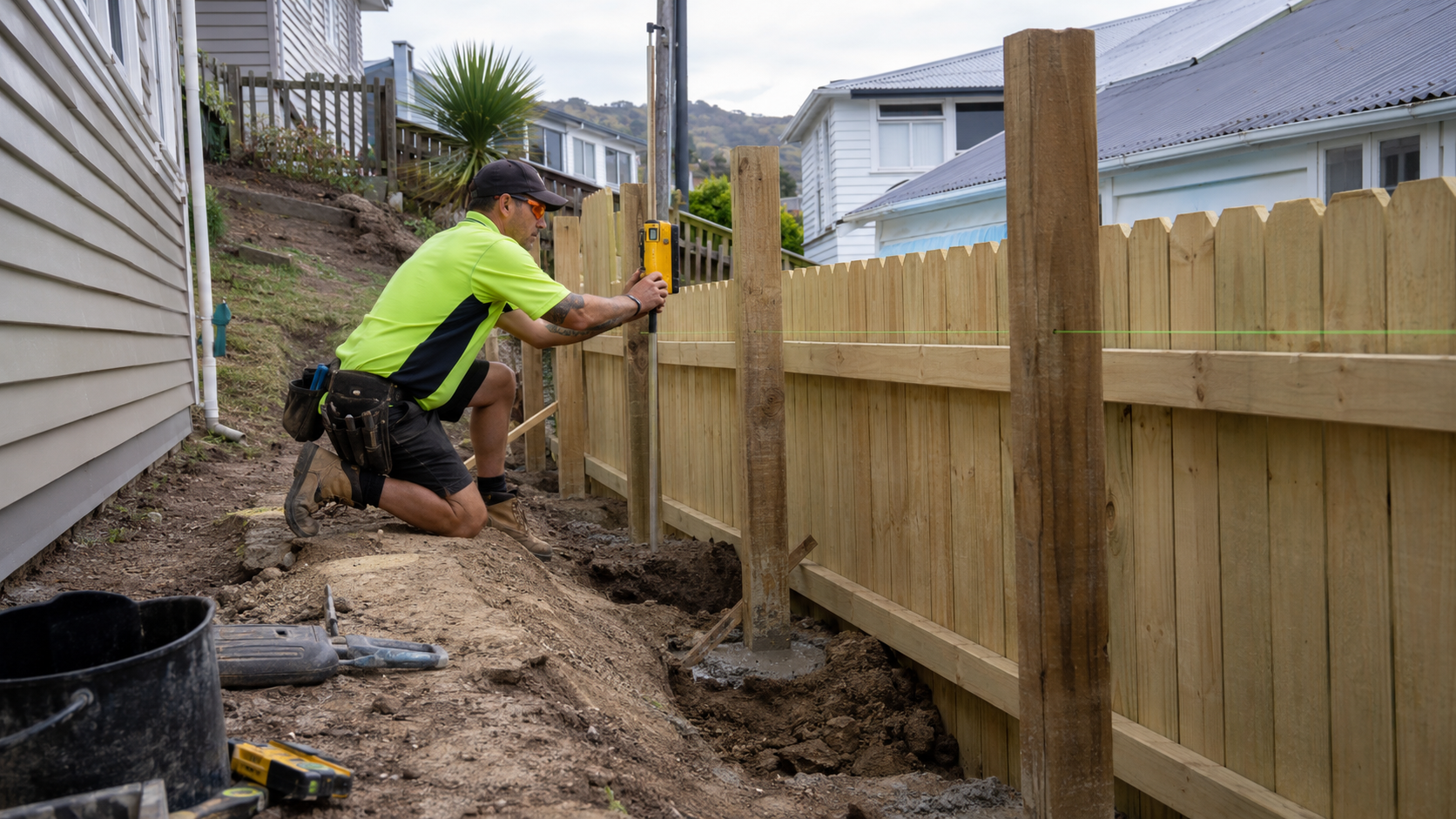
- Set out post positions — typically every 2.4–3 m for timber and Colorsteel, closer for taller or wind-exposed fences.
- Dig and set posts — minimum depth is usually 600 mm in stable soil, deeper in sandy or exposed sites. Posts are set in concrete and left to cure.
- Install rails and framing — horizontal rails are fixed once posts have cured sufficiently to bear load.
- Fix cladding or infill — palings, Colorsteel sheets, aluminium slats or glass panels are attached last.
- Fit gates and hardware — self-closing hinges and latches are mandatory for pool gates under Building Code Clause F9.
- Final check and clean-up — confirm gaps, gate swing and finish, then remove offcuts and concrete spoil.
The fencing calculator can help estimate post spacing and material quantities before you order.
Maintenance by Fence Type
| Fence type | Recommended maintenance |
|---|---|
| Timber | Restain or repaint every 3–5 years; check posts for rot every 2 years |
| Colorsteel | Rinse annually to remove salt and dust; touch up scratches promptly |
| Aluminium | Occasional wash; check fixings yearly |
| PVC | Hose down as needed; inspect for UV brittleness after 10+ years |
| Glass | Clean monthly in coastal areas to prevent salt spotting |
| Concrete block | Reseal render every 5–8 years if painted |
| Gabion | Check for stone settlement annually; top up if needed |
| Rural wire | Re-tension wires yearly; replace worn posts as needed |
Caught a problem early? Fence repair is almost always cheaper than a full replacement.
Common Mistakes to Avoid
- Skipping the boundary survey — building on the wrong line can force a costly rebuild and neighbour disputes under the Fencing Act 1978.
- Using untreated or under-treated timber posts — H3.2 is fine above ground, but anything in contact with soil needs H4 treatment minimum.
- Ignoring wind zone ratings — a fence built to a standard spec on an exposed coastal or hilltop site can blow over within a year or two.
- Under-sizing post depth — shallow post holes are the number one cause of leaning fences within five years.
- Forgetting pool compliance — even a beautiful glass or aluminium fence fails inspection if gaps exceed 100 mm or gates aren't self-closing.
- Not checking with neighbours before shared boundary work — under the Fencing Act, cost-sharing and fence type can require mutual agreement.
- Choosing style before checking council rules — some character or heritage zones restrict fence height, materials or colour on street-facing boundaries.
Expert Tips From the Trade
- Always ask for H4-treated posts specifically in writing on your quote — some cheaper quotes quietly substitute H3.2, which won't last below ground.
- In wind-exposed regions (Wellington, coastal Canterbury, parts of the Bay of Plenty), request deeper post footings and closer post spacing than the standard spec. It costs a bit more upfront but saves a rebuild in five years.
- If you're on a shared boundary, get any agreement about fence type and cost split in writing before work starts — verbal agreements are the most common source of neighbour disputes we see.
- For Colorsteel, order slightly oversized end caps and flashings. Most warranty callbacks are for water getting behind unflashed joints, not the panels themselves.
- If budget is tight, consider mixing materials — Colorsteel or block for the street-facing boundary, cheaper timber or post-and-wire for side and rear boundaries that aren't as visible.
- For pool fencing, choose a self-closing, self-latching gate rated for outdoor use from day one. Cheap indoor-rated hardware corrodes and fails compliance checks within a year or two.
Useful official references: MBIE — Building Code Clause F9, MBIE — check if you need consents and the Fencing Act 1978. Pool barriers are also covered by NZS 8500:2006.
Frequently Asked Questions
What is the most common fence type in New Zealand?
Timber paling fencing remains the most common residential fence in NZ due to its lower upfront cost and flexibility with height and style.
How much does it cost to fence a quarter-acre section in NZ?
For a typical quarter-acre section (roughly 1,000 m²), expect $8,000–$20,000+ depending on material, with timber at the lower end and Colorsteel or block fencing at the higher end.
Do I need council consent to build a fence in NZ?
Most residential fences under 2.5 m don't need building consent, but pool fences, fences near hazards and taller boundary walls often do. Check with your local council before starting.
What is the legal boundary fence height in NZ?
There's no single national height limit, but many district plans cap street-facing fences at 1.2–1.8 m and rear or side boundaries at up to 2 m. This varies by council, so check your local district plan.
Who pays for a boundary fence between neighbours?
Under the Fencing Act 1978, costs for a boundary fence are generally shared equally between neighbours if both parties benefit, though the exact type and standard can be negotiated or disputed through a Fencing Notice.
What timber treatment grade should fence posts be?
Fence posts in ground contact should be H4-treated at minimum; H5 is recommended in very wet or high-decay-risk areas. Above-ground rails and palings can use H3.2.
How long does a Colorsteel fence last?
A well-installed Colorsteel fence typically lasts 25–35 years with minimal maintenance, longer than most timber options.
Is Colorsteel or timber better for a coastal property?
Colorsteel with a marine-grade coating generally outperforms timber in coastal conditions, resisting salt corrosion and wind damage better than untreated or standard-treated timber.
What are the pool fencing requirements in New Zealand?
Under the Building Act and Building Code Clause F9, pool fences must be at least 1.2 m high, have no gaps exceeding 100 mm, and gates must be self-closing and self-latching.
Can I use chain link fencing around a pool?
Standard chain link alone usually doesn't meet pool compliance due to gap size and climbability; it needs additional mesh infill or a compliant gate system to pass inspection.
How deep should fence posts be set in NZ?
A minimum of 600 mm is typical in stable soil for a standard residential fence, with greater depth required in sandy soil, exposed sites or for taller fences.
What's the cheapest fencing option in New Zealand?
Post-and-wire fencing is the cheapest option for rural boundaries, while chain link is typically the cheapest residential-grade fencing.
Do aluminium fences rust in NZ conditions?
No — aluminium doesn't rust like steel, making it a strong choice for coastal or high-humidity areas, though fixings and hinges should still be checked periodically.
How often should a timber fence be restained?
Every three to five years, depending on sun and weather exposure. Fences facing west or in coastal areas may need attention closer to the three-year mark.
What is the best fence for noise reduction near a busy road?
Solid masonry (concrete block) or dense timber board-and-batten fencing perform best for noise reduction, outperforming open styles like aluminium slats or wire.
Can I build a fence myself in New Zealand or do I need a professional?
DIY is possible for simple, low-height timber or post-and-wire fencing, but pool fences, retaining walls and anything requiring consent should be installed or signed off by a professional to meet Building Code and NZS 8500 requirements.
What NZ Standard applies to pool fencing?
NZS 8500:2006 sets out barrier requirements for swimming pools, covering gap sizes, gate hardware and climbability of fence design.
Conclusion
There's no single best fence for New Zealand — the right choice depends on your budget, exposure to wind and salt, council rules, and how much maintenance you're willing to take on. Timber suits homeowners after a classic look and lower upfront cost, Colorsteel and aluminium reward those who want decades of low-maintenance performance, and glass or compliant mesh is non-negotiable around pools. Concrete block and gabion sit at the premium end for permanence and noise control, while post-and-wire remains the practical choice for rural boundaries.
If you're still weighing up options for your property, our team can walk you through what works best for your section, your council's rules and your budget.
Last reviewed: 24 July 2026 by the Kiwi Fencing Co installation team. Costs are indicative 2026 New Zealand ranges including GST and are not a fixed quote.
Not sure which fence suits your section?
Get a free, no-obligation site assessment. We'll walk the boundary with you, check the council rules that apply and recommend the material that actually makes sense for your exposure and budget.
Related Fencing Guides

Still Deciding Which Fence Is Right?
Leave your details and our team will get back to you with a free, no-obligation quote — usually within one business day.
Practical details
Related Topics and Specifications
For Types of Fences in New Zealand, the page connects the relevant options, site checks and project details. The related topics below help explain the materials, standards and practical decisions involved.
Related terminology customers may use includes Fence Types NZ and Fencing Materials New Zealand.
- timber
- COLORSTEEL®
- PVC
- glass
- aluminium
- chain wire
- privacy and pool barriers